
In January 2026, one of the largest sewage spills in U.S. history occurred along the Potomac River, exposing vulnerabilities in aging wastewater infrastructure and raising urgent concerns about environmental health, economic impacts, and public accountability across Washington, DC, Maryland, and Virginia. The collapse of the Potomac Interceptor sewer line not only polluted a critical regional waterway but also disrupted recreation, threatened local ecosystems, and raised questions about oversight of critical infrastructure systems.
What Happened
On January 19, 2026, a section of the Potomac Interceptor (a 72-inch sewer pipe located near Cabin John, Maryland) collapsed along the Clara Barton Parkway. The pipe is part of a 54-mile system that carries approximately 60 million gallons of wastewater daily from parts of Maryland and Northern Virginia to the Blue Plains Advanced Wastewater Treatment Plant in Washington, DC
The collapse caused an estimated 240–300 million gallons of untreated sewage to spill into the Potomac River and nearby areas, making it one of the largest wastewater releases in the country’s history. During the first five days alone, millions of gallons of raw waste flowed into the river before emergency bypass systems were installed to divert sewage around the damaged pipe.
Water Quality and Public Health
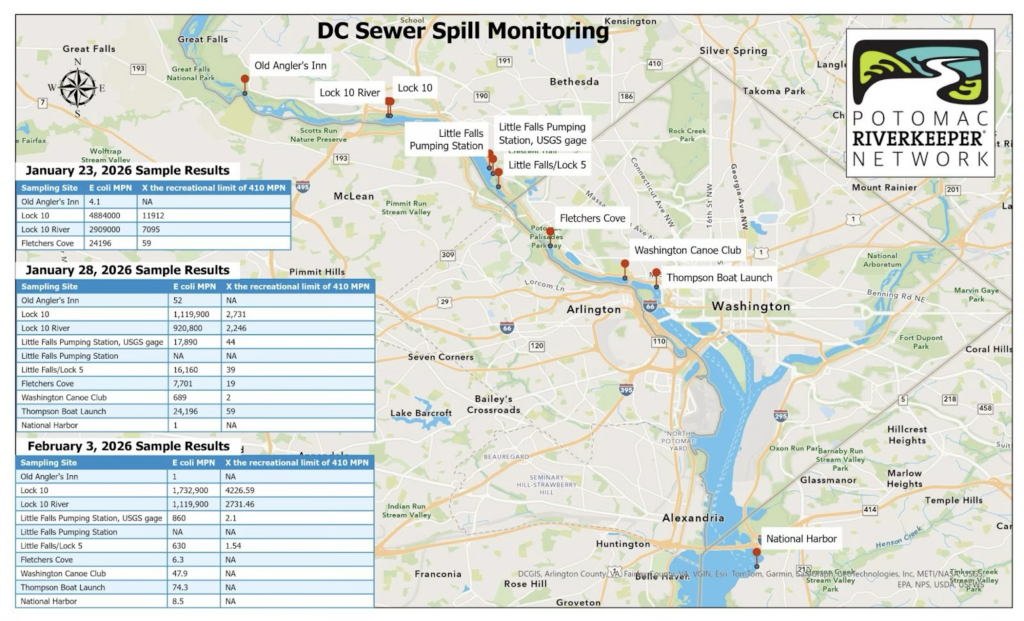
The immediate concern following the spill was contamination of the Potomac River with harmful bacteria and pathogens. Sampling conducted shortly after the collapse found E. coli levels as high as 12,000 times the safe recreational limit near the spill site.
High bacteria levels pose risks to swimmers, anglers, and anyone coming into direct contact with the water. Health advisories were issued across multiple jurisdictions while authorities monitored contamination levels.
Despite the severity of the spill, officials emphasized that drinking water for residents in DC, Maryland, and Virginia remained safe, since drinking water intakes are located upstream of the spill site near Great Falls.
However, environmental monitoring has continued due to concerns that bacteria and contaminants could persist in sediments and tributaries for months.
Recreation, Community Life and Economic Impact
The Potomac River is a vital recreational resource for the region. The spill forced temporary restrictions on activities such as boating, fishing, and other water recreation due to contamination risks.
River closures and health advisories affected local outfitters, fishing guides, paddling groups, and waterfront parks throughout the DC Metro region. Even after advisories were lifted in some areas, lingering concerns about water quality have discouraged some residents and visitors from returning to the river. Impact will persist as we get closer to peak season where thousands of residents and visitors in the region use the river.
Businesses connected to the river economy, such as marinas, kayak rental companies, fishing charters, and waterfront restaurants, experience disruptions during the contamination period. Reduced recreational activity and negative publicity surrounding the spill created economic ripple effects across communities in Maryland, Virginia, and the District.
The spill also prompted legal and political consequences including, a class-action lawsuit was filed against DC Water alleging negligence and seeking compensation for individuals who lost recreational use of the river.
Advocacy and Accountability
Nature Forward and other environmental organizations across the region have played a critical role in monitoring the spill, communicating risks to the public, and pushing for accountability. More than 17 regional organizations signed on to a letter to DC Water organized by Nature Forward leading the Choose Clean Water Coalition. This letter (supported by PRKN and Potomac Conservancy) asked for an investigation, accountability, transparency, improved monitoring and long-term infrastructure planning. Nature Forward also participated in DC Water’s oversight and performance hearing on March 2, urging city leaders to prioritize investments in aging sewer infrastructure and ensure that the public is informed about environmental and health risks.
Advocates emphasized that the incident highlights systemic challenges facing wastewater infrastructure across the United States, particularly in regions where pipes and systems built decades ago are now reaching the end of their lifespan. Nature Forward commends our partners that have been on the frontlines since day one of the spill including Potomac Riverkeeper Network, Potomac Conservancy, and other local organizations and entities pooling resources for monitoring, like University of Maryland.
The Potomac Interceptor collapse underscores a broader national problem: aging water infrastructure that struggles to keep up with population growth, climate pressures, and decades of deferred maintenance.
For the DC region, the spill serves as a reminder that protecting waterways like the Potomac requires sustained investment, transparent governance, and strong community oversight. As cleanup and repair efforts continue, the incident has sparked important conversations about infrastructure resilience, environmental justice, and the shared responsibility of safeguarding one of the region’s most important natural resources.