
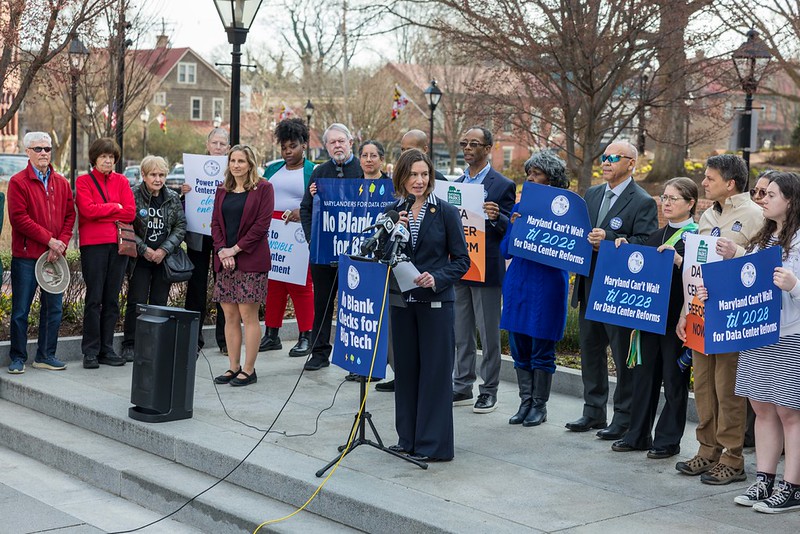
The Utility RELIEF Act is a broad energy and environmental bill focused on lowering electricity costs for Maryland ratepayers. It is an omnibus bill, incorporating aspects from at least 15 different energy and environmental bills that did not pass on their own this session. Originally, the bill’s data center provisions were fairly weak. However, after working with members of the Senate Committee on Education, Energy, and the Environment, several of Nature Forward and Marylanders for Data Center Reform’s priorities were added as amendments to the bill, including establishing a voluntary clean capacity program. If the final version of the bill includes these amendments, the Utility RELIEF Act could be the beginning of a state regulatory framework to better manage data center development.
Read our one-pager on Bringing Your Own New, Clean Energy HERE:
Where is the Utility RELIEF Act Now?
The Utility RELIEF Act passed through the House and has crossed over to the Senate. In the Senate, several amendments were made to the bill, including adding several data center provisions. The Utility RELIEF Act will likely pass the Senate soon and will then move to a Conference Committee, where Senators and Delegates will work to resolve the differences between its two versions. A final version of the Utility RELIEF Act will then be passed by both the House and Senate and sent to the Governor’s desk to be signed into law.
What are the differences between the House and Senate versions of the Utility RELIEF Act?
Currently, there are two versions of the Utility RELIEF Act: one coming from the House, and one coming from the Senate. These differences will be resolved soon in a Conference Committee before a final version is passed. Here are some of the key differences in the two versions’ data center language:
Definition of a “Large Load Customer”
Both versions of the bill change the definition of a “large load customer,” or an electricity consumer that uses an exceptionally large amount of power (like a data center) and is subject to different regulations. The Senate version of the bill defines a large load customer as having a 60% load factor, while the House version uses a 75% load factor. The smaller the load factor in the definition, the more data centers and other large load customers are subject to regulations, so we are pushing for the broader, 60% Senate definition.
Data Center Clean Capacity
The Senate version of the bill includes a voluntary Clean Capacity program, which prioritizes data centers that bring their own clean energy, use battery backup, and participate in a demand response program (where energy strain on the grid is decreased during peak hours) for interconnection and permitting. The House version does not codify this program. The Clean Capacity program has been one of our top goals this legislative session, and we are pushing for the final version of the bill to include the Senate’s Clean Capacity provisions.
Data Center Transparency Requirements
Both versions of the bill require data centers to report energy use, water use, and other relevant information on a Large Load Registry to the state. However, the House version goes further to require that registry is available to the public, while the Senate version would not make these reports public until after a data center begins operations. It is essential that residents have access to information about possible data center impacts in their communities throughout the planning and development process, so we are pushing for the House version’s broader transparency requirements.
Speculative Rate Setting
Currently, utilities can set rates based on spending forecasts, rather than past spending. These forecasts are often inflated, incentivizing overestimating spending and increasing costs to ratepayers. The House version of the bill prohibits this speculative rate-setting practice, while the Senate version would study speculative rate-setting, but allow the practice to continue. Speculative rate-setting hurts consumers and drives up prices, so we are advocating to include the House version’s prohibition.
How Can I Get Involved?
To make sure the Utility RELIEF Act includes the strongest possible language regulating data centers, contact your Delegates and Senators and tell them you want the following language included in the final bill:
- The Senate bill’s definition of a “large load customer” as having a 60% load factor
- The Senate bill’s voluntary Clean Capacity Program
- The House bill’s publicly available Large Load Registry
- The House bill’s prohibition of speculative rate setting
