Updated 4/13/26 @ 11:15am
Thank you to Nature Forward volunteers Anne DeNovo, Chris Powell, Heather Safford, and Sabine Miller who helped track VA legislation this General Assembly and co-wrote this blog post with NOVA Conservation Advocate Renee Grebe!
Lots of good environmental wins and some progress still to be made
It is undeniable that many good pieces of legislation made their way to the Governor’s desk this General Assembly. The Virginia Conservation Network has wonderful summaries for (1) Clean Energy & Climate, (2) Land & Wildlife Conservation, (3) Land Use & Transportation, (4) Clean Water & Flood Resilience, and (5) Good Governance bills that are awaiting the Governor’s signature.
WHAT COMES NEXT: Governor Spanberger will sign, amend, or veto all bills passed by the General Assembly by April 14th. Then, legislators will reconvene for a veto session on April 22nd to vote on the governor’s amendments.
For the bills that we were tracking, we were generally quite pleased, with a couple of exceptions. Let’s dive in!
Biggest misses: Data Center Reform
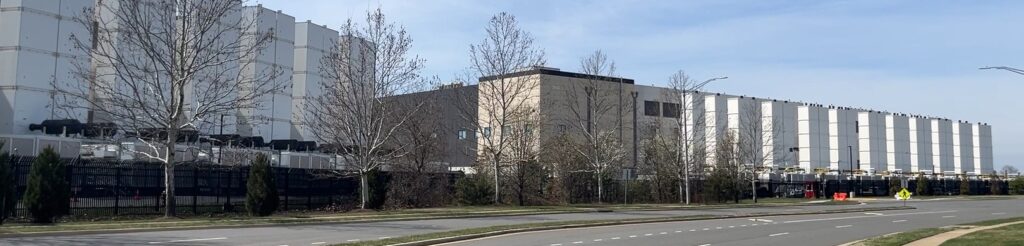
WHAT HAPPENED: While Nature Forward acknowledges the progress that the General Assembly made in passing some data center reform bills, we believe that much stronger legislation is needed to protect our environment and our communities.
This session showed that our leaders have yet to determine if Virginia will be a state that will continue to let data centers spread without consequence, or one that will create necessary guardrails to protect ratepayers, water supply, and the environment. We, along with other environmental organizations and community advocates, will continue to ask our leaders to address this issue head on in the next legislative session as this is one of our highest priorities.
Of the 8 data center related bills we tracked, half are moving forward. Additionally, the House and Senate are also evaluating if the 2-year budget can temporarily tie data center tax incentives to clean energy and energy efficiency or if tax incentives should be offered at all – we are awaiting next steps.
Good bills that are moving forward:
(1) HB153 requires a noise study for proposed data centers and solidifies a locale’s ability to require additional impact studies (e.g. on water, parks, forests)
(2) SB553 requires reporting of water usage of existing data centers
(3) HB507 requires stronger pollution controls for data centers’ backup diesel generators
(Signed by Governor on 4/8/26; effective 7/1/2026)
(4) HB284 / SB371 requires establishing energy demand flexibility programs for data centers to protect ratepayers and reduce strain on the grid, especially at peak usage
(Signed by Governor on 4/8/26; effective 7/1/2026)
Big wins: Managing Invasive Plants
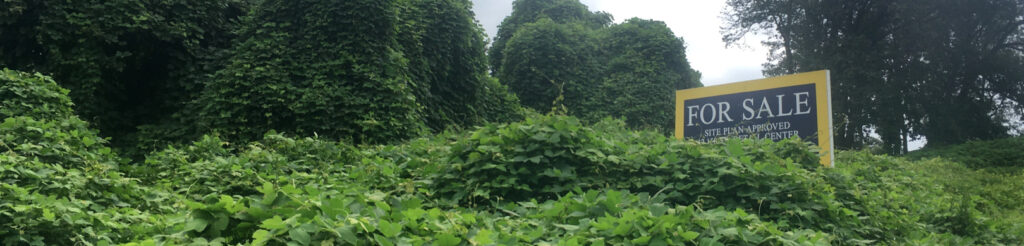
WHAT HAPPENED: This was an area that really shined! All of the bills we prioritized are moving forward – what great wins for controlling invasive plants in Virginia this year!
All of these bills were signed into law by the Governor on April 6, 2026!
(1) HB388 / SB89 allows localities to use the powers of their public service districts to raise funds to manage invasive plants. Now, local advocacy is needed to implement this and reap the benefits of this option!
(2) HB109 fixes Virginia’s current noxious weeds law that prevented invasive plants from being considered noxious weeds if they were “commercially viable” (e.g. sold in a nursery). That exception will be removed, clearing the way to banning the sale of DCR’s listed invasive plants even if they are commercially viable. There is a phase-in period after designation of a plant: 2 years for grasses, forbs, and vines, 4 years for shrubs, 7 years for trees. The Board of Agriculture and Consumer Services is scheduled to review the regulatory process and submit a report by November 1, 2026.
(3) HB88 requires the Virginia Department of Transportation (VDOT) to develop a plan for controlling invasive plants along Virginia’s state highways and provide a report by December 1, 2027.
(4) SB163 allows volunteers to apply pesticides and herbicides for invasive control on state property, with state authorization. This extends the local authority that Virginia provided in 2024 to volunteers working with localities. This legislation adds another wonderful tool in our toolbox to fight particularly challenging invasives with minimal or no soil disturbance (e.g. porcelainberry, kudzu, tree of heaven).
Strong progress and some flops: Supporting Sustainability / Conservation
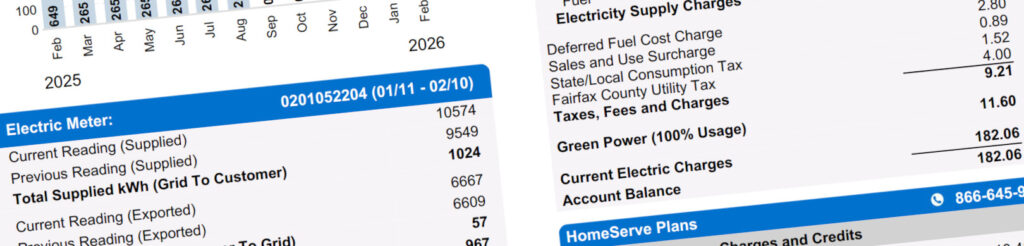
WHAT HAPPENED: The biggest miss of the bills that we were following in this category is the fact that, once again, strengthening our state’s tree canopy did not result in the state-wide benefit. Despite multiple years of advocacy efforts and other localities wanting this benefit, our legislators punted once again.
Good bills moving forward:
(1) HB397 / SB802 gave us the biggest win in this category! This legislation requires Virginia’s rejoining of and participation in the Regional Greenhouse Gas Initiative (RGGI) after former Governor Youngkin withdrew Virginia in 2024. RGGI participation in 2020-2023 resulted in over $800 million collected from polluters to protect communities from flooding and as well as lower energy bills for Virginians, and we look forward to those continued investments and savings moving forward.
(2) HB597 – This bill establishes the Wildlife Corridor Grant Fund, a grants program for projects to conserve or enhance wildlife corridors and wildlife crossing infrastructure and data collection. The goal is to reduce wildlife vehicle collisions, connect protected areas, and help endangered species. Individuals will be able to make voluntary contributions through DMV electronic transactions and tax returns.
Bill moving forward with less benefit than hoped for:
(3) HB549 / SB589 aimed to strengthen our state’s tree canopy, but this broader initiative failed to get the support it needed. The only legislative win here is that the Town of Vienna (in Fairfax County) is able to adopt a 10-year tree canopy ordinance (like Fairfax County can). All other changes went by the wayside, which is incredibly disappointing. The rest of the state will have to wait yet again to get stronger tree conservation and tree canopy legislation.
Big wins: Renewable Energy
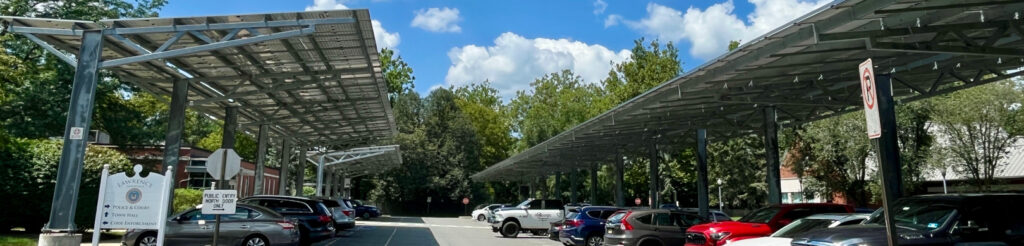
WHAT HAPPENED: A number of bills passed related to renewable energy in this year’s session, including expanding the capacity of shared solar, streamlining permitting for rooftop solar, and requiring Dominion to get a certain amount of its renewable energy portfolio from geothermal heating and cooling systems.
Good bills moving forward:
(1) HB395 / SB250 makes Virginia the 2nd state to allow “balcony solar” – plug-and-play, portable solar panels to offset customers’ electricity consumption, up to 1200 watts per household. Utility providers cannot charge fees related to their installation or use, or require that customers seek approval from the utility before installing or using a solar generating device. This is a big win for making solar more accessible for all!
(2) HB1234 / SB26 allows the option for localities to require that solar canopies be installed in parking areas of new developments and allows this power to be used to offset the consumption of electricity by the parking lot (e.g. lighting, EV charging) or adjoining building served under the same account. The bill has a delayed effective date of July 1, 2027.