
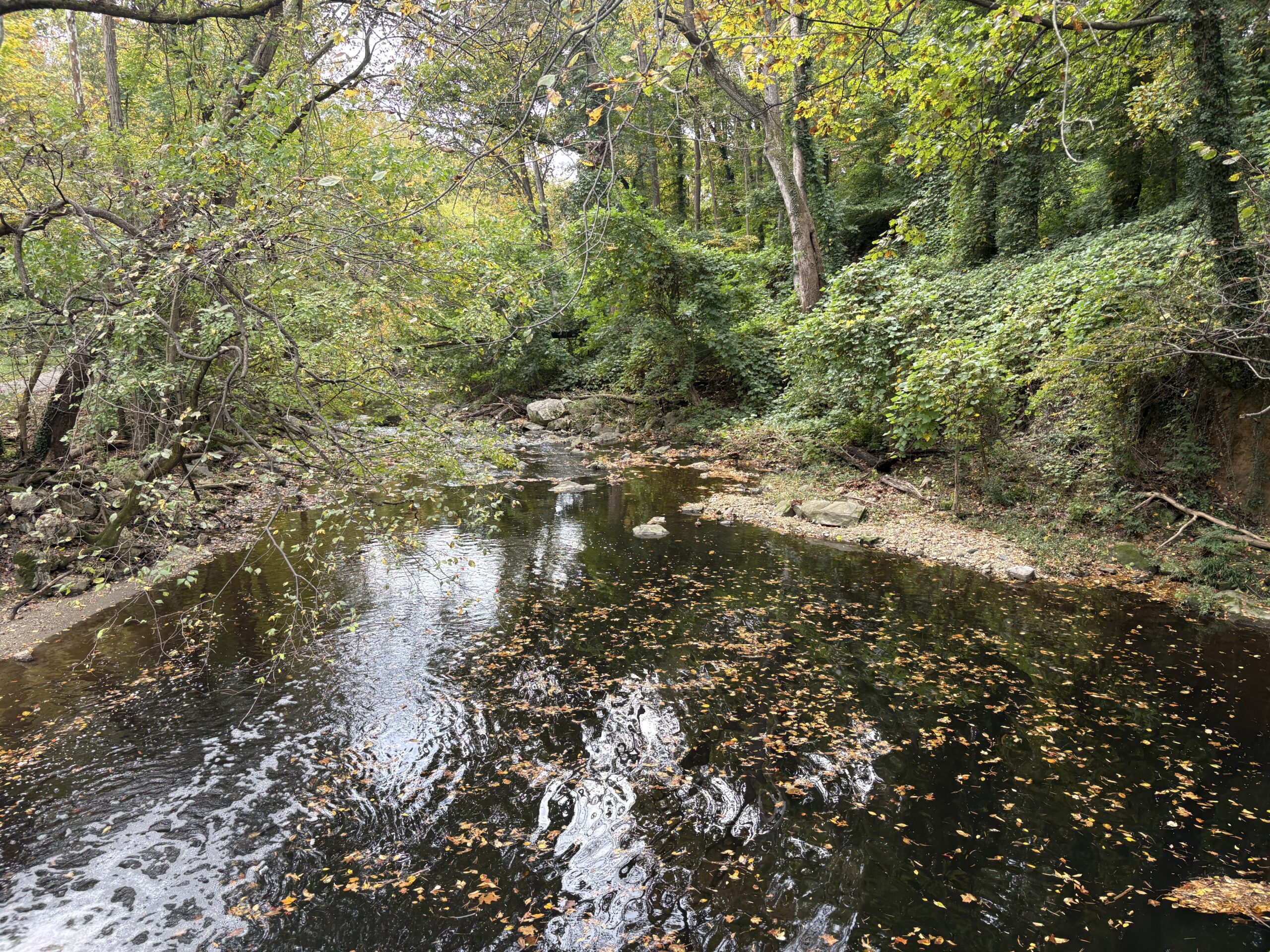
The following is part of a quarterly series showcasing the streams sampled by Nature Forward’s Water Quality Monitoring program, along with the volunteers and communities that interact with them. Grassroots Engagement Coordinator Douglas McRae joined monitors at Little Falls Branch in Bethesda, a popular spot for streamside engagement with the community.
A popular saying (attributed to Greek philosopher Heraclitus) claims you can never step in the same river twice. Stream monitors might agree; streams can change with the seasons and the weather as silt and stones shift, vegetation grows and recedes, and riffles form and vanish. When I visited the Little Falls Branch water quality monitoring site on an October afternoon, I found it (like many streams) distinct from my earlier visits. A recent rainstorm had swelled the stream’s flow, and large, downed tree limbs divided the monitoring reach in half. The monitoring team, consisting of members of the Little Fall Watershed Alliance (LFWA) set up their station, undeterred by these temporary changes.
Little Falls Branch is an urbanized stream, named for the rapids along the Potomac marking the fall line between Piedmont and Coastal Plain in the Washington, DC region. The stream’s limited riparian buffer and proximity to neighborhood roads of Bethesda contribute to runoff contamination and consistently fair-to-poor IBI scores at this monitoring site. Nevertheless, Little Falls is a site where stream monitors do a great deal of community engagement and education work, taking advantage of the popular walking and running trail parallel to the stream. Team leader Frank Sanford has brought his digital microscope for closer inspection of today’s critter catches, and any passerby can take a look at what the team finds. While low IBI scores are a constant at Little Falls, the streams’ macroinvertebrates end up getting noticed by a wider audience.
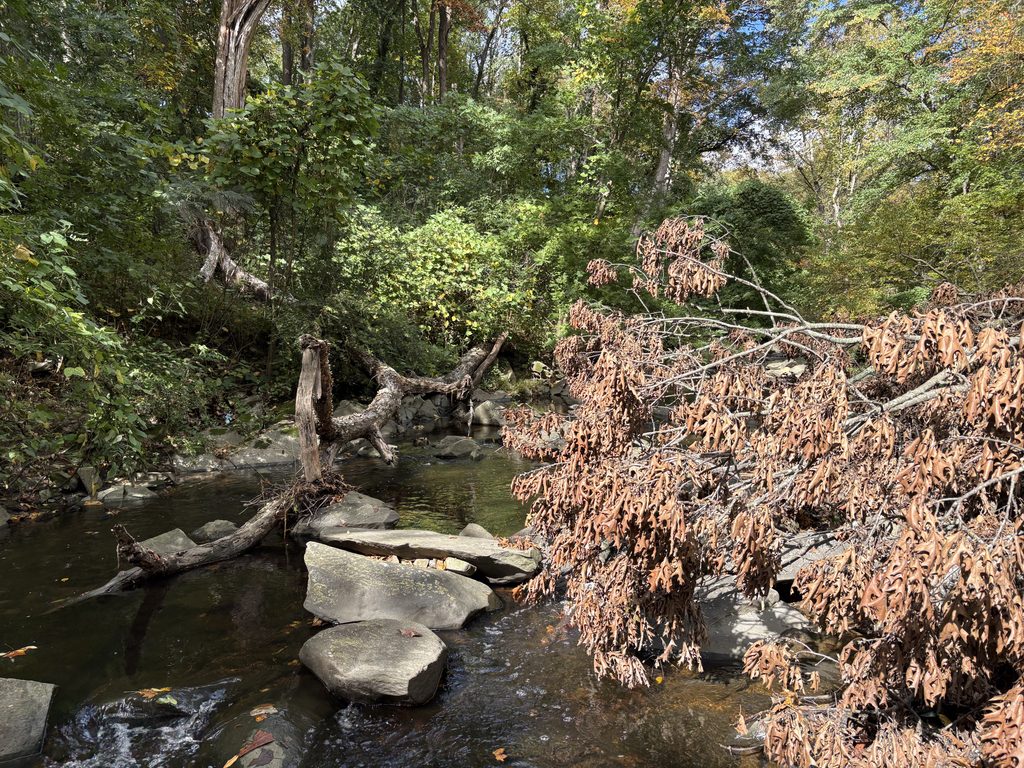
Little Falls Branch along Massachusetts Ave on a fall afternoon
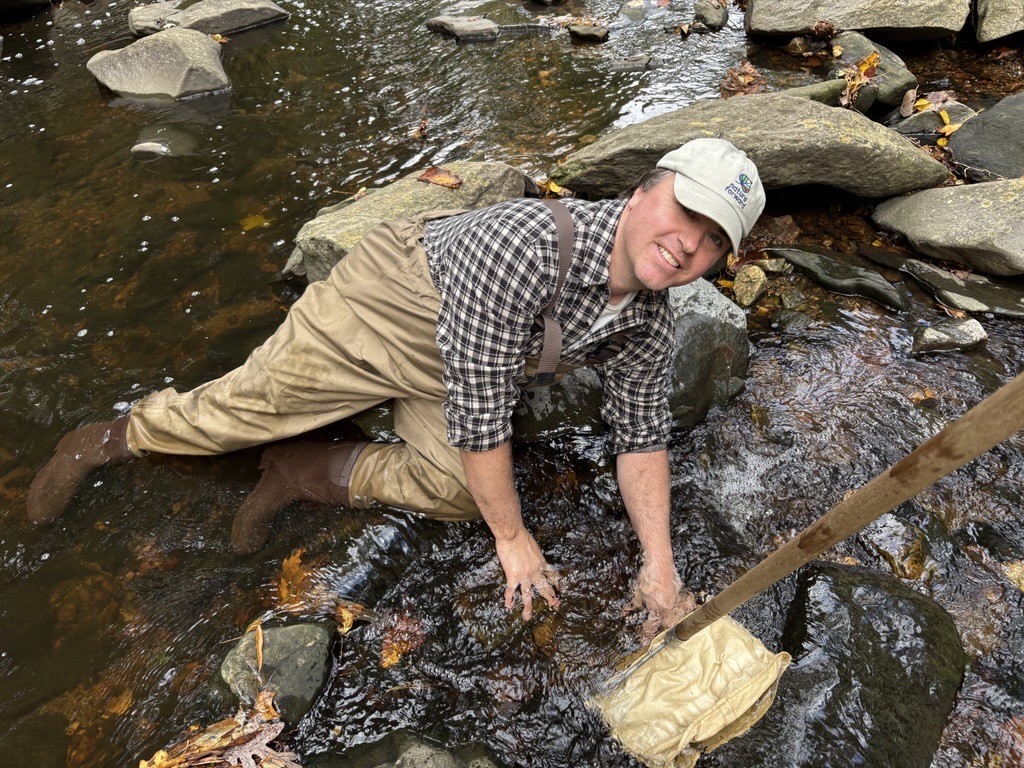
The stream is high and fast-flowing today, but Averill Simone and I manage to locate riffles and even a bit of aquatic vegetation. Averill is a high school student who already has a great deal of experience in both monitoring and watershed education, so we have no trouble finding habitat. My chest waders allow me to get down and rub cobbles in the streambed to dislodge any critters into our net, although I misstep at one point and take a tumble into the stream. I get some creek water down the front of my waders but somehow manage not to drop the sample bucket I’m carrying!
Looking for cobbles. This was before I tripped and fell!
Back at the monitoring table, I dry out my socks as the team of LFWA and Nature Forward volunteers sort through the bins of critters and autumn debris. Most of the organisms we find are pollution tolerant, namely aquatic sow bugs, flatworms, black flies, and a few leeches. A small leech with its branching gut clearly visible grabs our attention on the digital microscope screen, as does a single scud, a shrimp-like crustacean that prefers less polluted streams. Every find is of interest to the stewards of Little Falls Branch, who take other water quality measures across the watershed and publicize them for their members and partners.
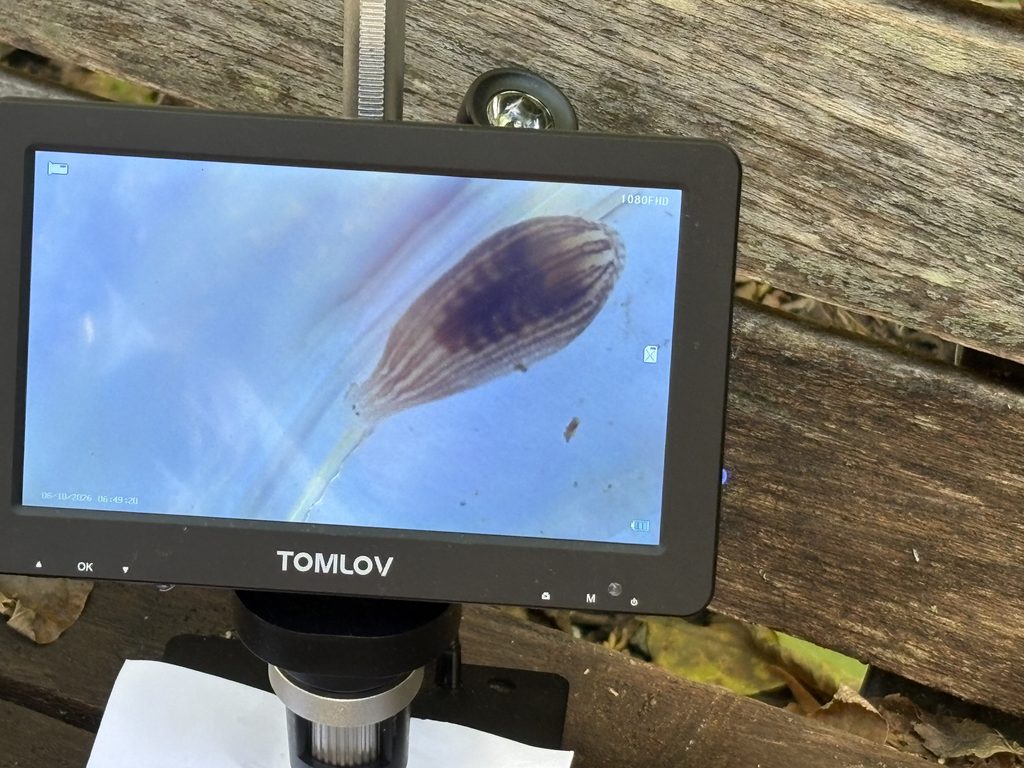
Looking at a leech up close
The last time I came out to monitor with the Little Falls Branch crew, I had asked Frank about the large boulders found along the stretch of stream we monitor. Large rocks and boulders don’t provide adequate habitats for macroinvertebrates. In an earlier era, boulders and concrete tunnels were added to the stream as flood control measures. Today, stream advocates are pushing to remove those channels and recreate a more natural habitat further upstream, as well as remove barriers and restore wetlands. According to Nature Forward’s State of the Streams report, Little Falls was the only stream in the past 15 years to increase its wetlands area. The gradual restoration of the watershed and the care and attention from its human allies lead me to think that Little Falls Branch will be different each time I step into it—hopefully without falling in.
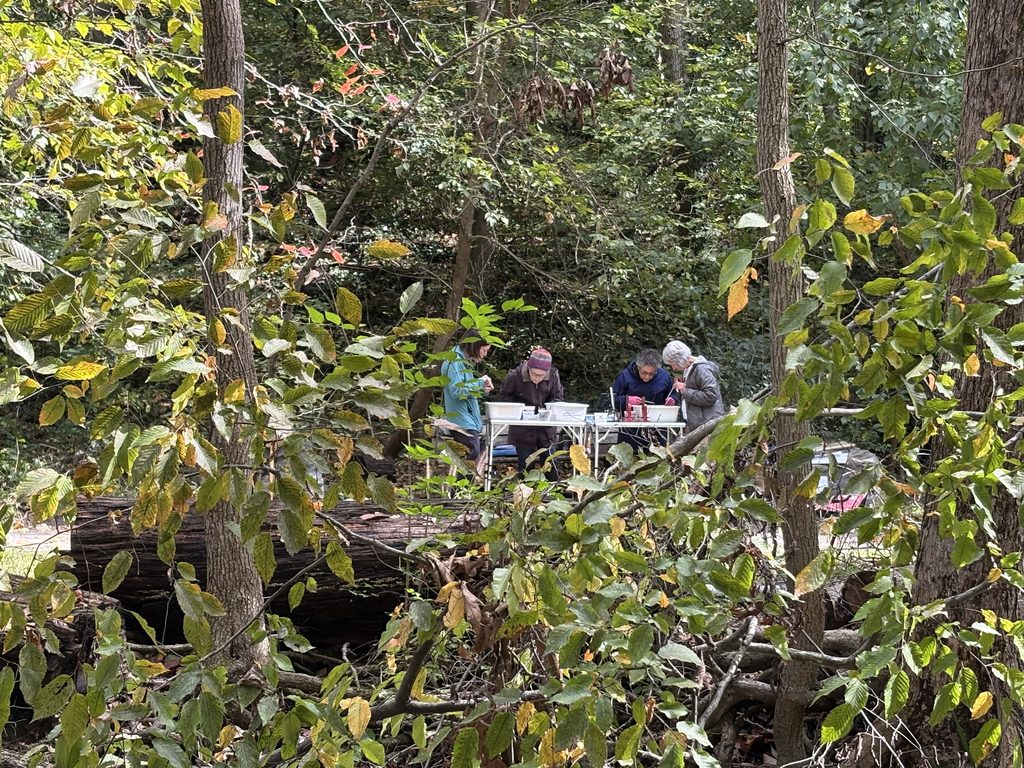
The monitoring team at work along the Little Falls Branch trail