View this page in: English | Español
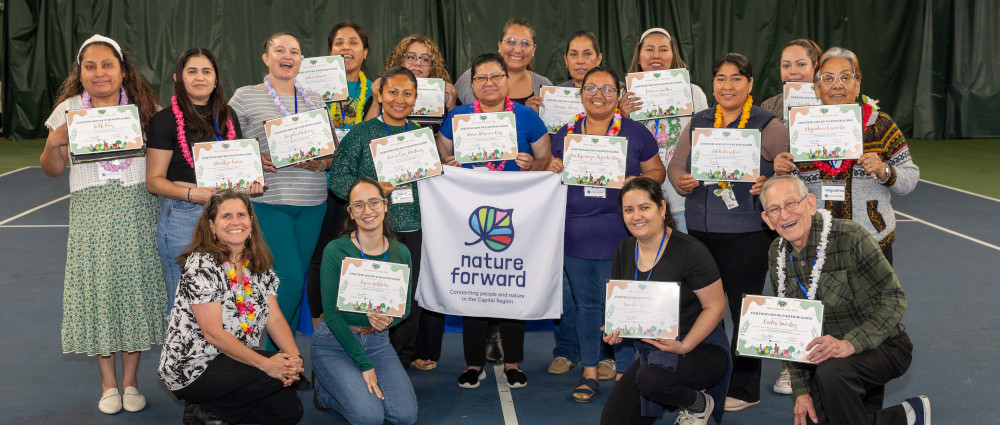
Congratulations to 17 Audubon Estates residents and nature champions who joined us for the Menos Basura, Más Vida (Less Trash, More Life) initiative (in Fairfax County, VA). In June 2025, these advocates completed their capstone project as the culmination of a 10-month, 18-class community-led litter reduction program. Nature Forward, in partnership with Defensores de la Cuenca, facilitated the initiative.
The Menos Basura, Más Vida program helped residents identify the root causes of litter in their community. It also engaged individuals and families with environmental education across a variety of topics of interest to community members. The program included field trips, public speaking, advocacy and suggestions on ways to drive change.
Analyzing litter
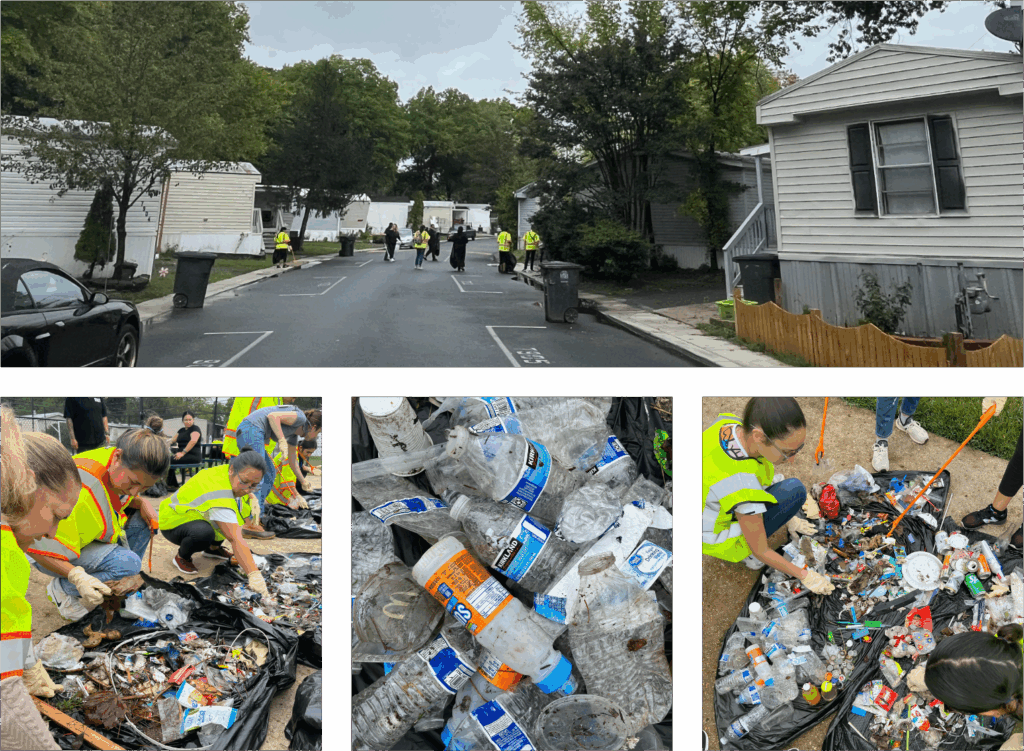
The program started with an audit of places where litter is a problem in Audubon Estates. Participants then worked to figure out the sources and root causes of the pollution. Water bottles lids were among the most frequently collected types of debris. That indicated the high probability of high usage of single-use plastic water bottles (and suggesting a distrust of the public water supply). The audit also identified the challenges of broken trash can lids and open (lidless) recycling containers where materials often escape on windy days. Additionally, advocates found many places where dog waste was left on the ground.
These findings and discussions informed the direction of the program.
Classes and field trips
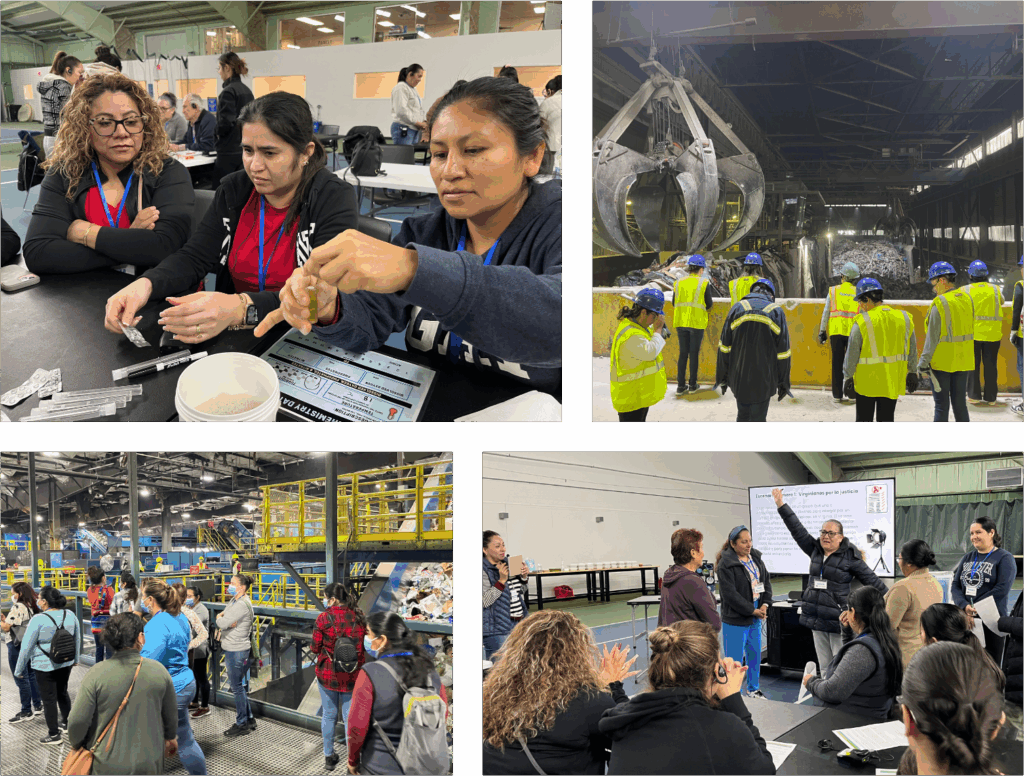
Class participants met every two weeks to learn about each of the identified topics (and more), build community engagement skills, and take part in three field trips:
- Prince George’s Materials Recycling Facility to see how recycling is collected, sorted, and processed in Maryland (which recycles more kinds of materials than Virginia)
- Fairfax Water’s drinking water treatment plant to see how our public drinking water gets processed to ensure safe and accessible drinking water for all
- ReWorld, waste-to-energy trash facility in Lorton to see where garbage from Fairfax County and the broader region goes to be reduced to ashes (to take less landfill space) while generating energy for the electrical grid
Engaging the community to drive positive change
All of the classes and in-person experiences helped participants decide how to create a community-led initiative to help reduce litter in Audubon Estates. For their capstone project, class participants created four workgroups to focus on developing an information table focused on the following key litter reduction topics:
- Trash pollution in our waterways
- Proper recycling
- Dog waste in our environment
- Composting
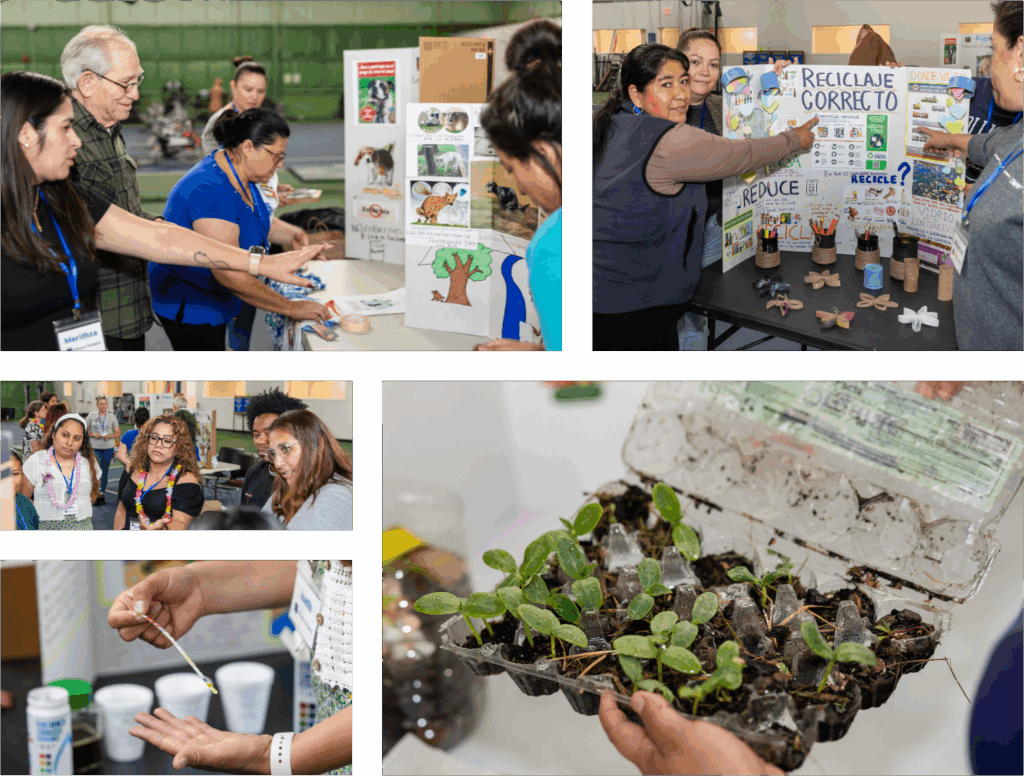
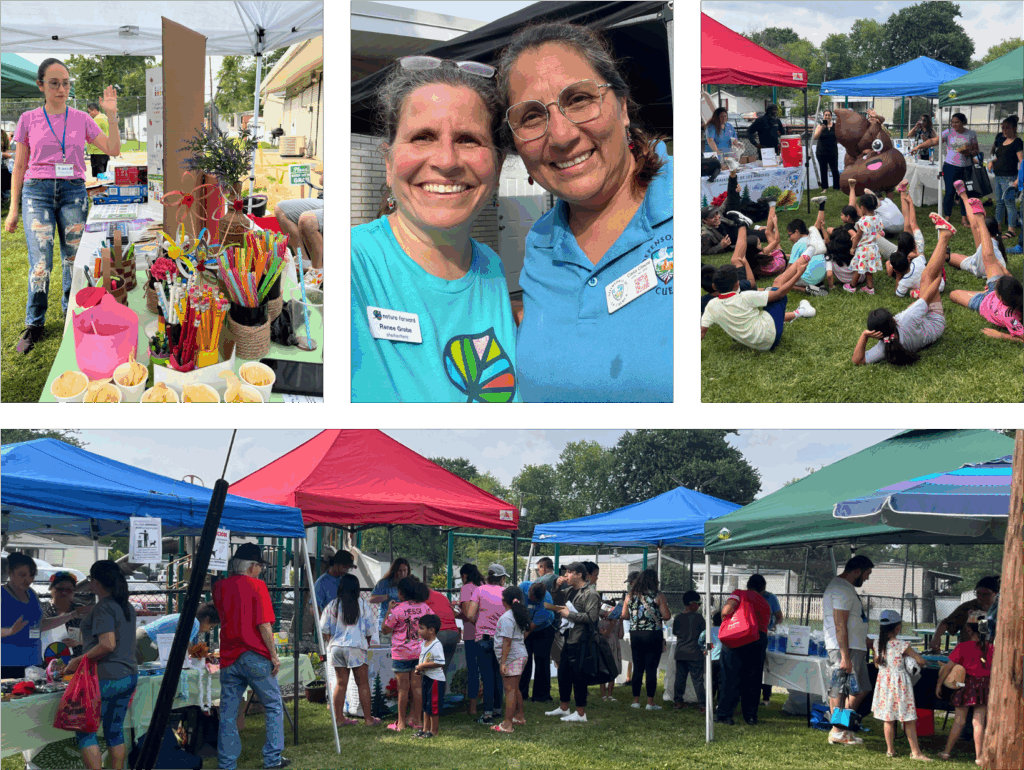
Capstone project: Salsa in the Park
Each workgroup developed materials to educate fellow community members about these topics. Workgroup leaders also brainstormed interactive elements for their outreach initiatives to ensure that learning about these topics was informative but also fun and engaging. On June 13, 2025, Defensores de la Cuenca hosted a community event in Audubon Estates called “Dancing with Mother Earth / Salsa in the Park” where program participants shared their anti-litter project with the larger community.
We look forward to continued collaboration with these environmental champions to help strengthen their leadership in the community to advocate for a healthier Route 1 corridor and Fairfax County!
. . .
Thank you to all of our additional partners who helped make this program a success: Fairfax County’s Neighborhood and Community Services, Fairfax County Solid Waste, Fairfax County Stormwater, Prince George’s Materials Recycling Facility, Fairfax Water, Arcadia Farms, ReWorld, Audubon’s property management team at Hometown America, and Northern Virginia Soil and Water Conservation District.