
The following is the fourth piece in a quarterly series showcasing the streams sampled by Nature Forward’s Water Quality Monitoring program, along with the volunteers and communities that interact with them. Grassroots Engagement Coordinator Douglas McRae joined a small crew at Dark Branch in Little Bennett Regional Park. Thank you for reading Creek Chronicles and stay tuned for more installments during the upcoming year!
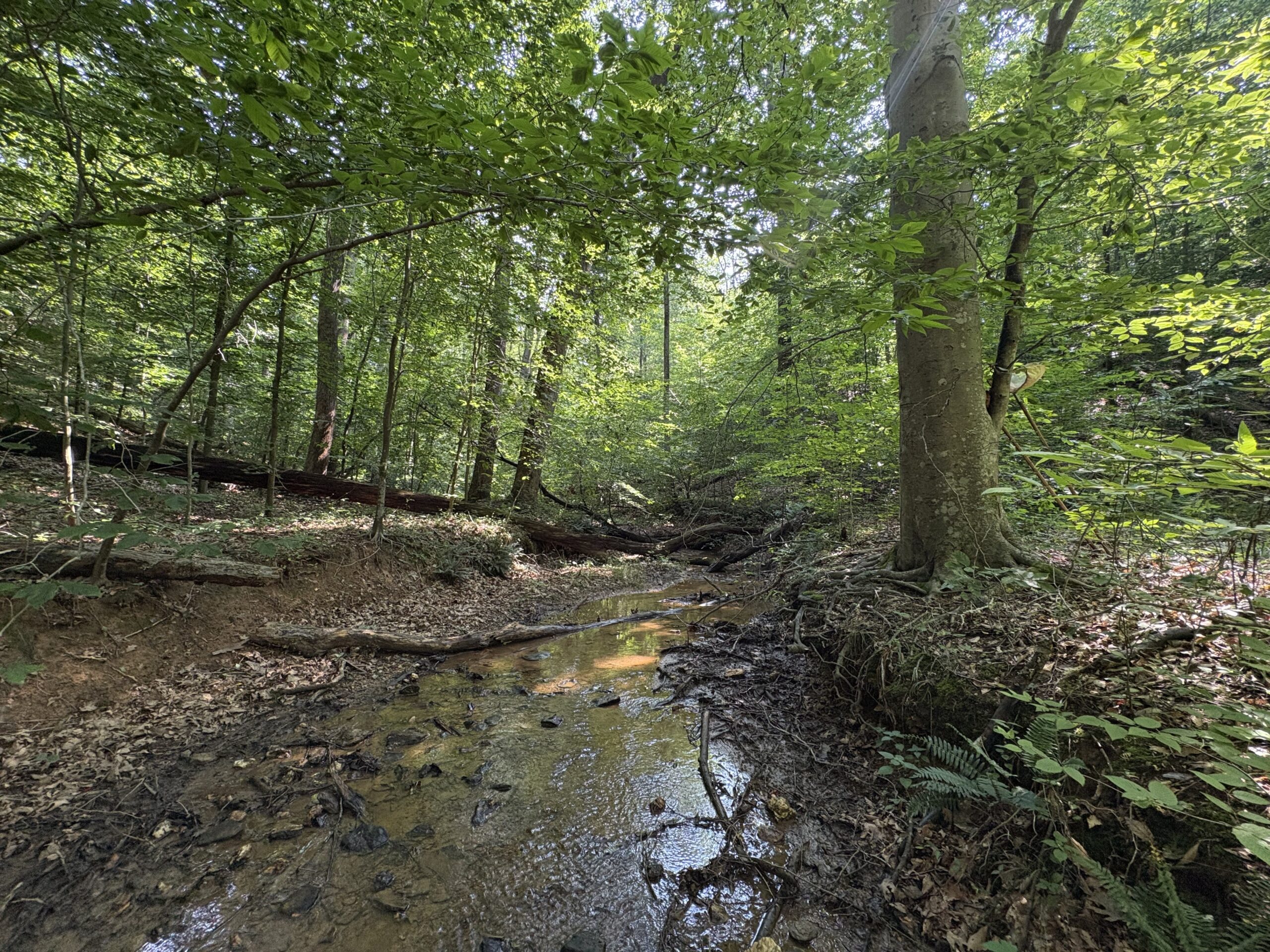
“Tread lightly!” Wendy Duke, Dark Branch’s site leader, reminds me as we head down the trail along Dark Branch. Situated off a gated access trail near Hyattstown, Maryland, Dark Branch is shaded and secluded, its shallow streambed relatively hidden as we approach. Diverse wildflowers and fungi greet us on the forest floor, while wood thrushes call down from the canopy. Wendy has monitored here since 2009 and subsequently has done everything from replanting native plant species to monitoring nearby vernal pools. “Only a handful of monitors venture to this site each season,” she tells me, since only a small crew can fit at the midpoint of monitoring reach (the stream section where the team collects). Those who can make it are rewarded with a unique monitoring experience.
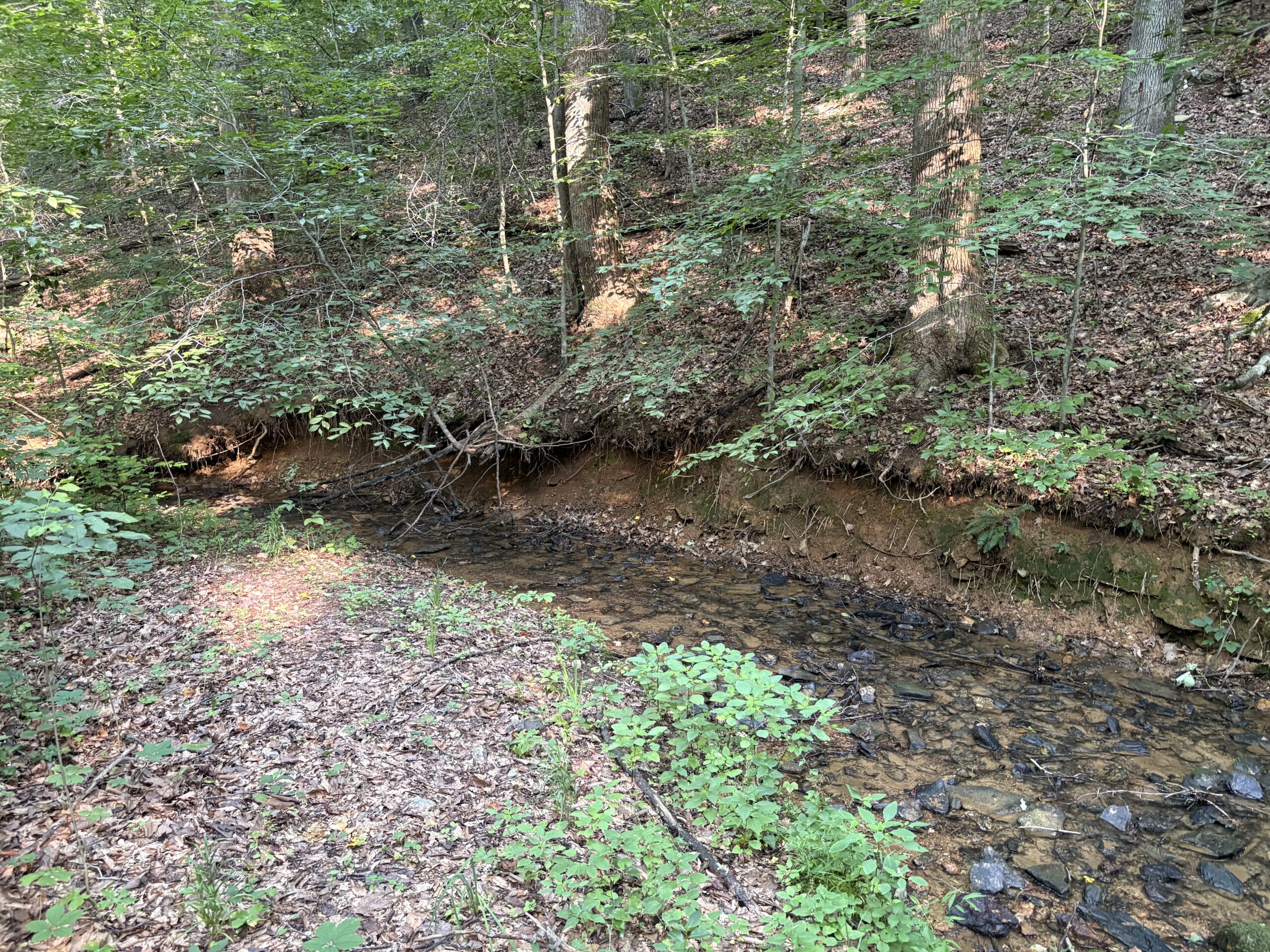
Dark Branch: shallow but healthy
While every stream is special, Dark Branch can claim some of the most consistently high IBI (Index of Biotic Integrity) scores across Nature Forward’s monitoring sites. Its location in Little Bennett Regional Park, off I-270 between Clarksburg and Frederick, plays a role. This protected reserve in Montgomery County is situated on the southern edge of the Lower Monocacy watershed that extends down from Frederick County. The forested reserve amidst farmland is distinct enough that airplane pilots can use it as a navigation reference. Plans to make Little Bennett Creek into a reservoir a few years back were scrapped, Wendy tells me, after a park manager established a trout fishing stream nearby. As a result, the urban and agricultural runoff that impacts most Montgomery County streams has less effect on Dark Branch and other tributaries in the reserve area.
The result is a relatively diverse aquatic macroinvertebrate community year-round. Today, however, will be hot—in fact, one of the hottest days of a sweltering summer in the DC-Capital region. Our team of experienced monitors, including Sam Brown, Gale Minnich-Blewis, Gregg Petersen and Marge Wellman, initially are concerned that the quality of their macroinvertebrate count may be diminished by the intense heat.
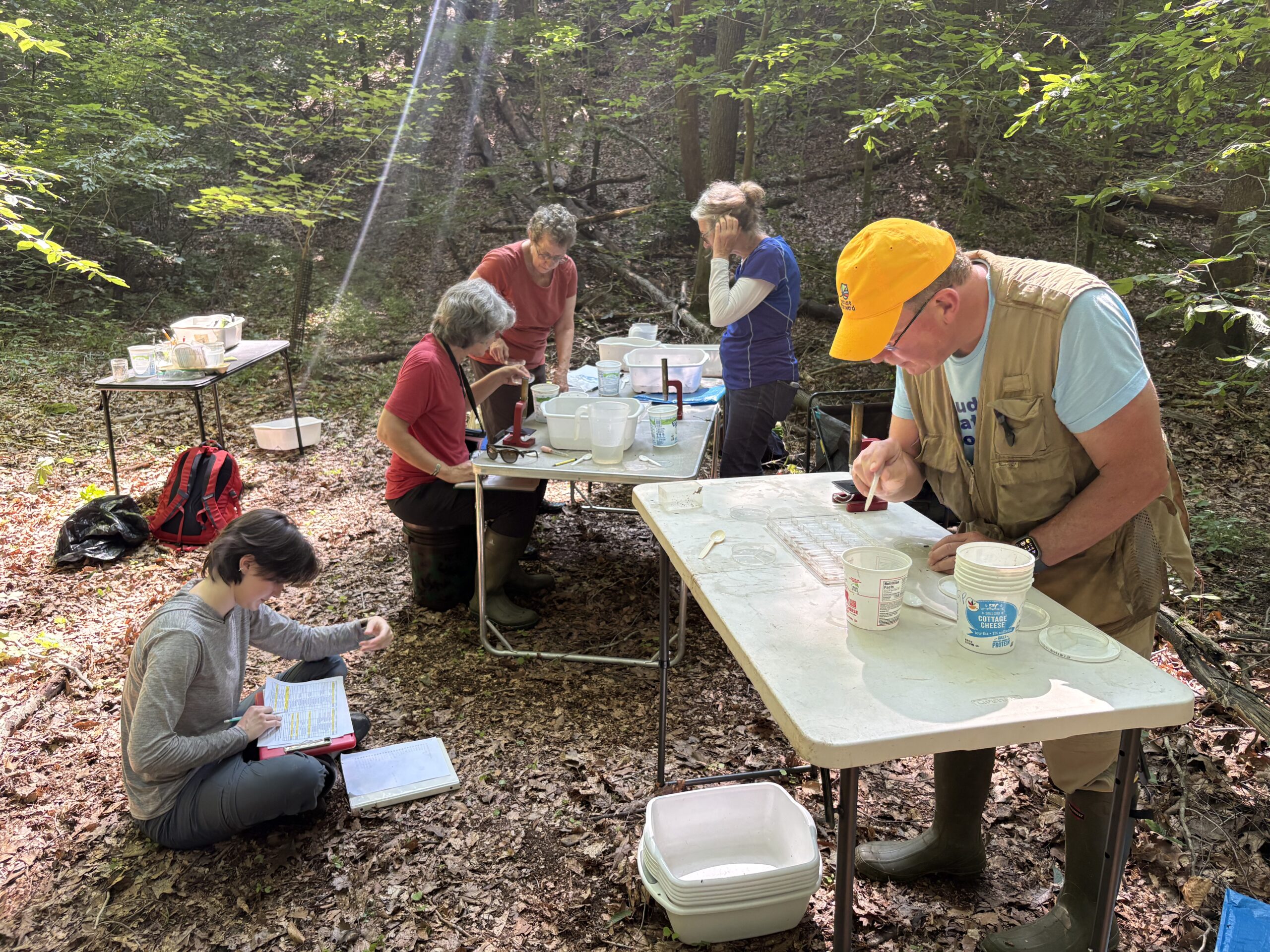
The team identifies macroinvertebrates together
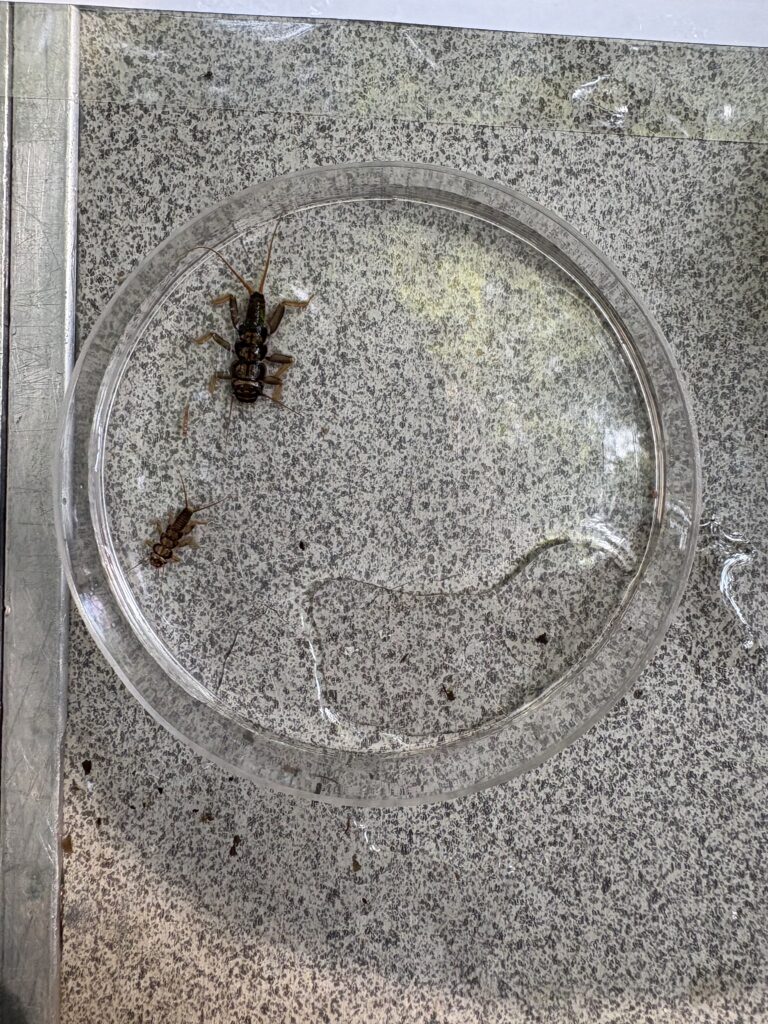
By the time we’re back on land, however it’s clear that Dark Branch will not disappoint. Caddisflies, mayflies and stoneflies appear as silt and leaves settle in our collection bins. Gregg Petersen notes that “people would kill for this at any other site” as the team tallies nearly 50 Leuctridae—pollution-sensitive rolled-winged stonefly larvae that are one indicator of a healthy stream ecosystem.
In the end, the number of mayflies (20 individuals) relative to the overall collection size (110 macros total) is on the cusp of perfection, and Dark Branch will earn an excellent IBI score of 4.43 out of 5, the same score, in fact, that it earned the previous summer. Such consistently high scores are both rare and laudable, providing not only insight into what organisms a clean stream can host but the impacts of watershed stewardship. Dark Branch has once again served up a remarkable variety for such a small stream, providing an example in urban Montgomery County of what a healthy waterway can look like when protected from our human footprint.
Stoneflies of various sizes from Dark Branch
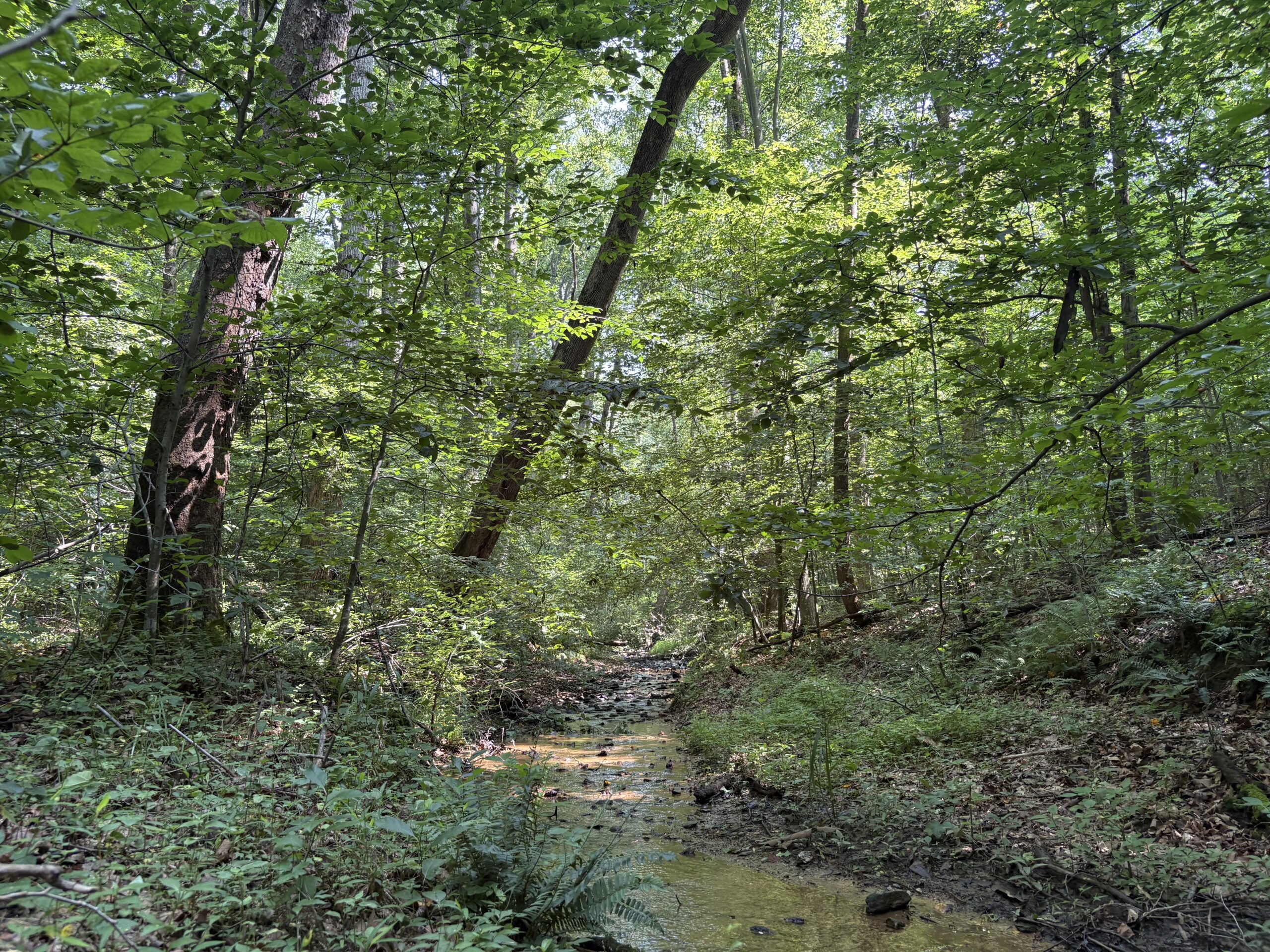
Looking up Dark Branch on a summer morning