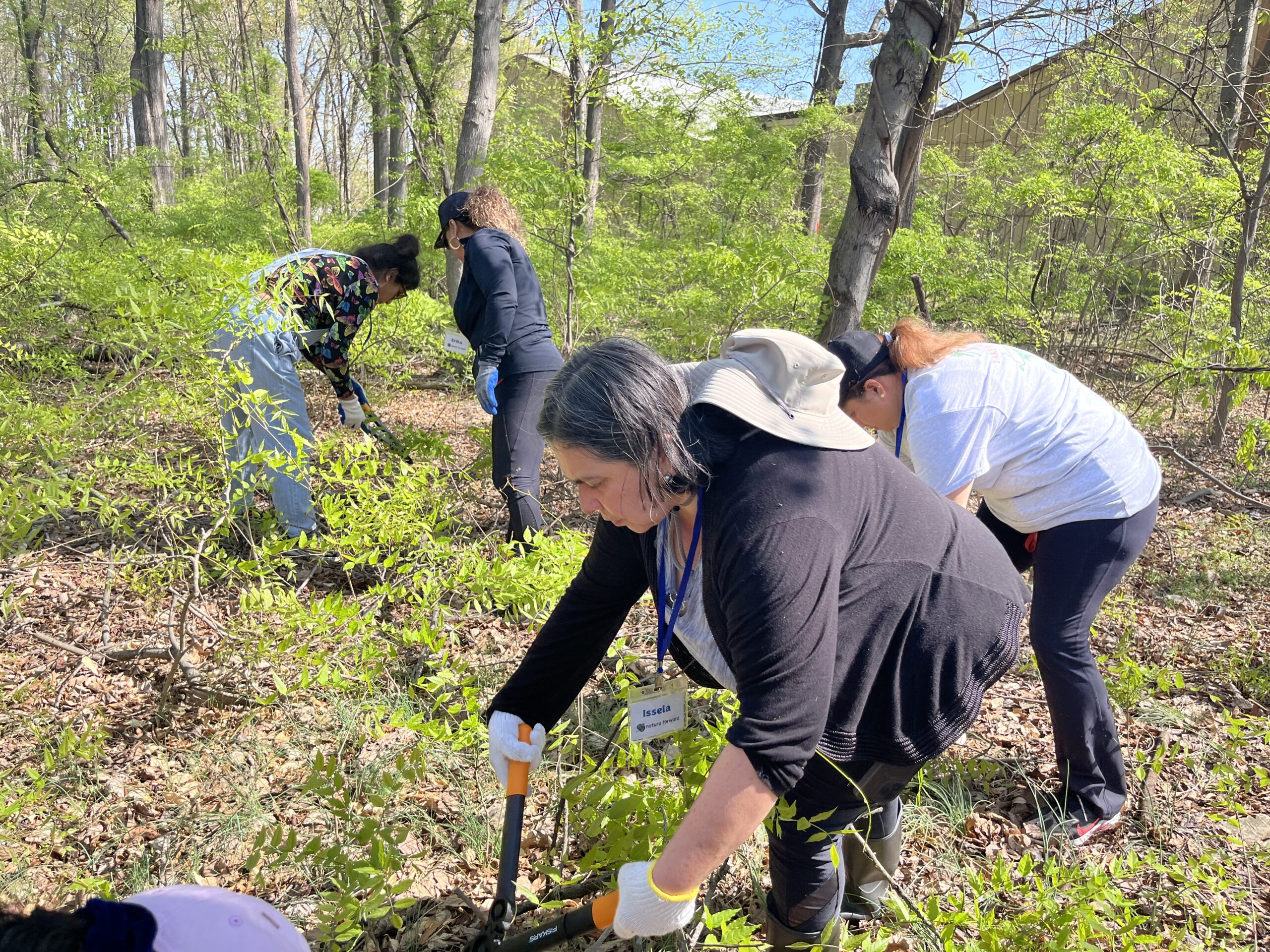
Next to the Hybla Valley Community Center, between the Audubon Estates and Colchester communities along Route 1 in Alexandria, lies a relatively forgotten, near impenetrable thicket of forest. Walking along Audubon Avenue, few pedestrians might even stop to observe this buffer area, if they even bothered to stop at all. This seemingly unremarkable area, however, became the center of De la maleza a la naturaleza (From Weeds to Nature), a Nature Forward initiative in partnership with Defensores de la Cuenca to empower residents to take action on invasive plant management in their community—quite literally in their backyard.
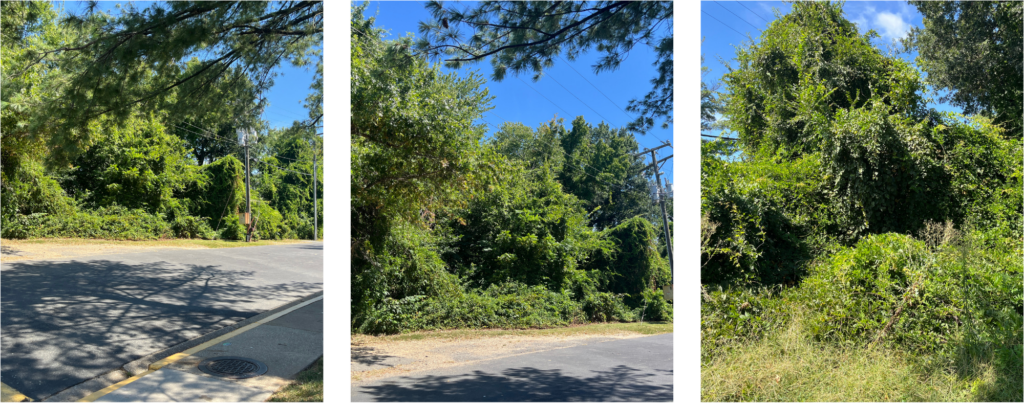
Views of the overgrown buffer zone
Indeed, the thick wall of vegetation on the outer edges of this buffer area was an invasive, non-native wisteria. These relentless vines constrict and weigh down small and mature native trees and make it hard for the forest to regenerate and thrive. Through a series of six classes and three volunteer workdays, 19 residents from Route 1 communities sought to gain knowledge and learn ways to address invasive plants in their own neighborhoods, while also learning about the broader campaign to promote native plants and minimize invasive plants in Northern Virginia.
Learning through field experiences
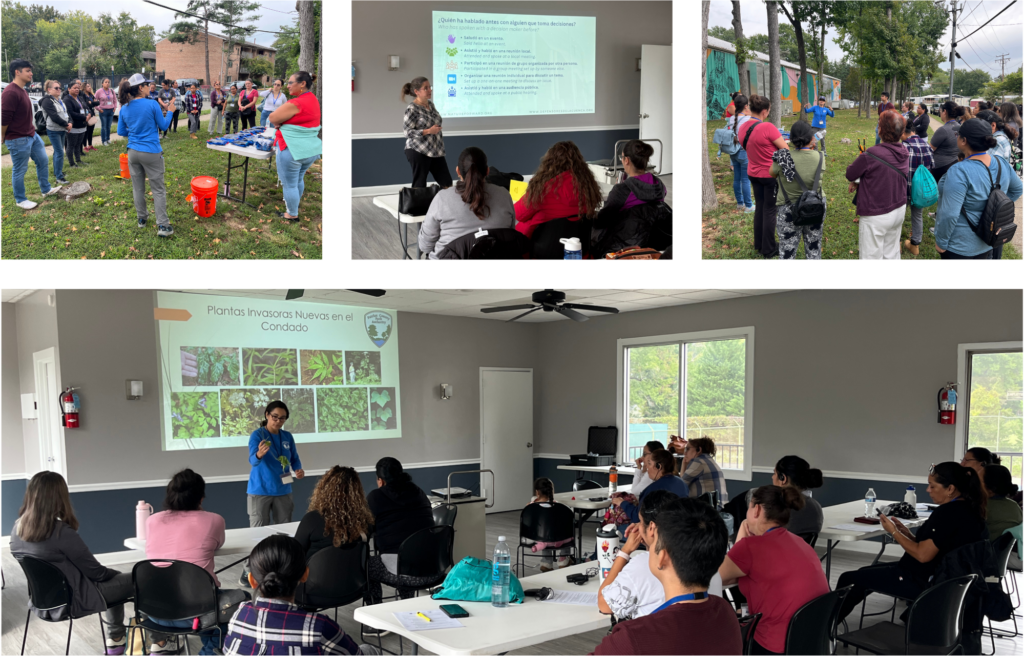
Building upon prior programming focusing on protecting local streams and addressing litter and trash management in the Little Hunting Creek watershed, participants alternated between classroom learning and field work (see images on right) to identify impacts of invasive plants as well as how to effectively remove invasive plants. They also learned from partners with the Fairfax County Parks Authority (FCPA), the Northern Virginia Soil and Water Conservation District (NVSWCD), and Earth Sangha on the importance of healthy, native plants for the forests, wetlands and riparian zones along Little Hunting Creek.
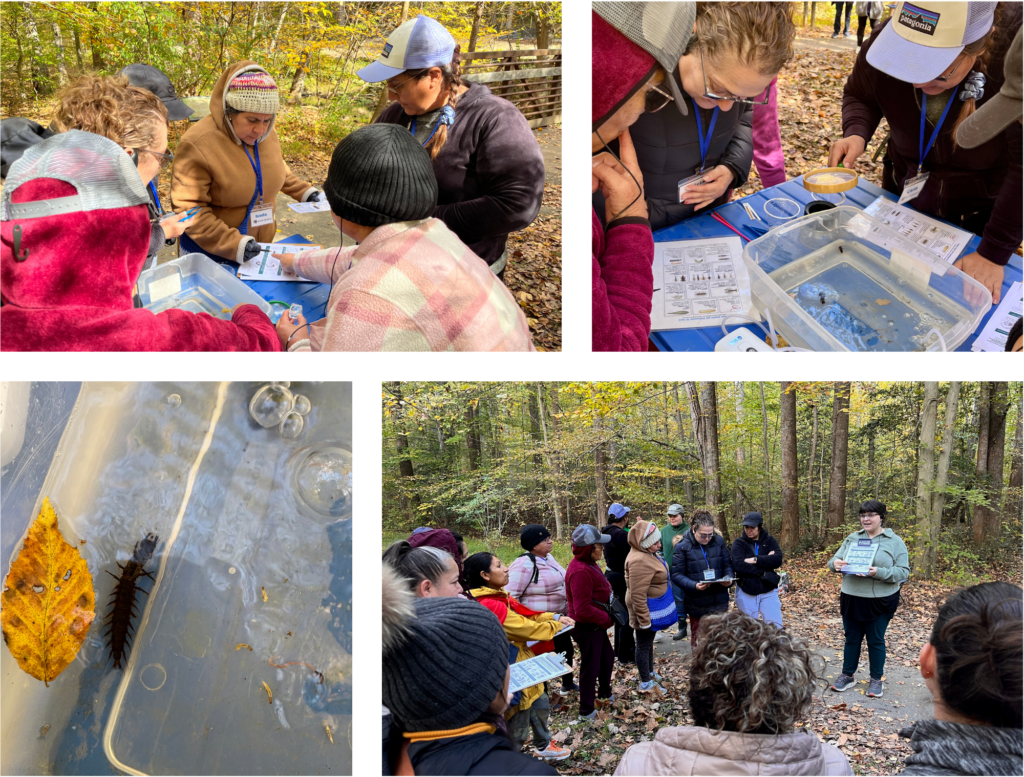
Aquatic connections
A high point of the class was a field trip to nearby Hidden Pond Nature Center in Springfield (see images on left), where NVSWCD staff demonstrated how to collect aquatic macroinvertebrates from streams. Macroinvertebrate populations can serve as proxies for stream and environmental health, and these tiny organisms benefit from the presence of a healthy tree canopy and native plants along the stream. Looking at dragonfly larvae and others pulled from the stream under microscopes underscored for participants the complex ecosystem supported by robust riparian areas and native species.
Future advocates
The focus of the course always circled back to the community, and to the forested buffer at the Hybla Valley Community Center. After an invasive removal training with leaders from Fairfax County’s Invasive Management Area Program (IMA), participants donned long pants and sun hats to carry out three volunteer workdays, spending Saturdays cutting back vines—some as thick as your forearm! Crucially, class participants recruited family and neighbors to join them on these weekend jornadas (see images on right), teaching them about the importance of invasive management in their local community.
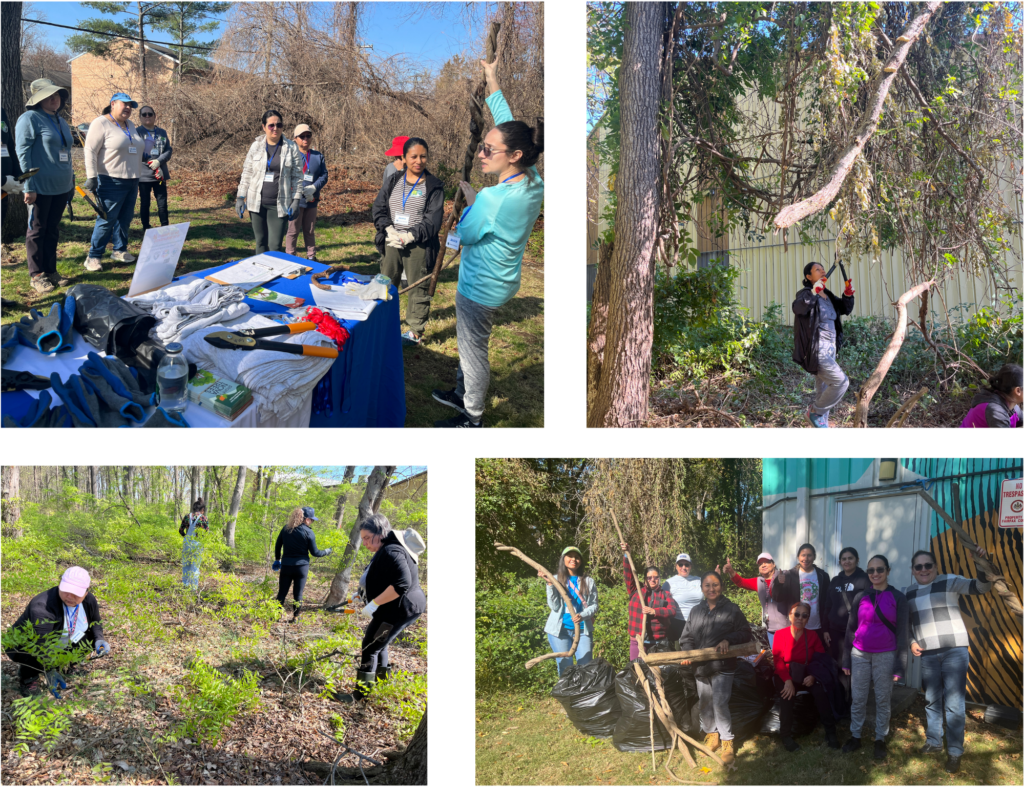
Indeed, invasive management can make a huge difference along Route 1 and beyond. State legislation passed earlier this year will allow for the establishment of service districts to help fund the management of invasives. Class participants learned about this bill and other opportunities for environmental advocacy in Fairfax County and the Commonwealth in the final class sessions and even heard testimonies from fellow participants about experiences advocating for communities and the environment at the local level.
There is still much work to do in the public green spaces before they will become more than mere buffer zones. But after De la maleza a la naturaleza, community members have a stronger sense of what needs to be done. Nature Forward looks forward to continuing to strengthen our partnerships with Route 1 communities through nature for all!
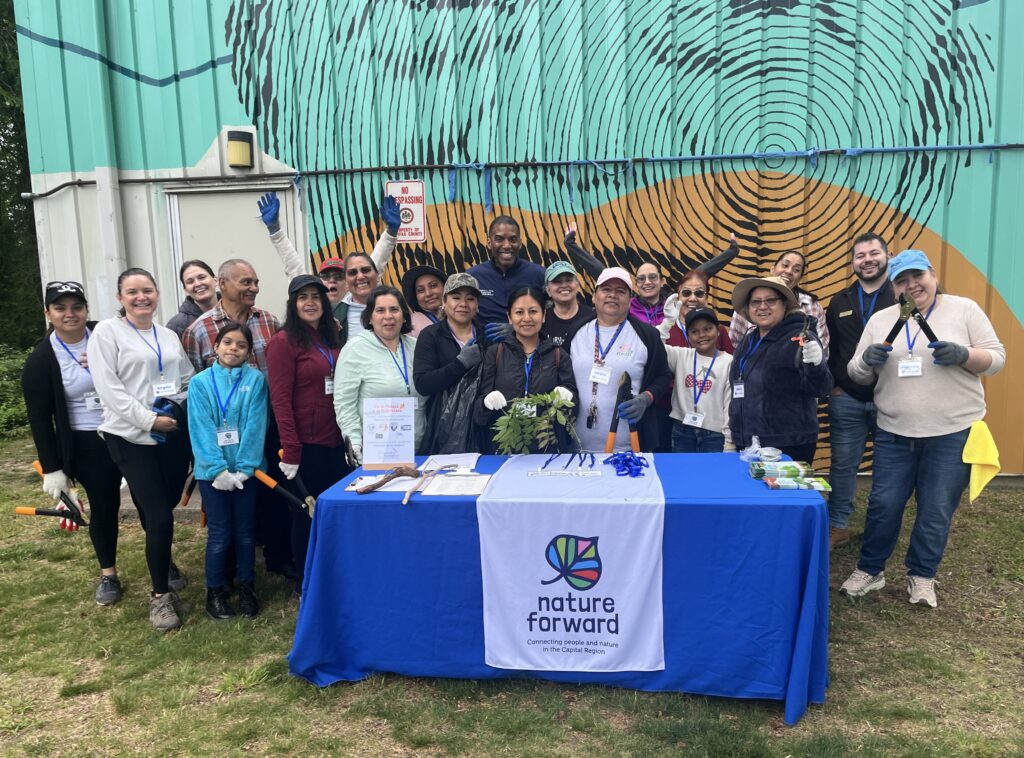
Class participants and community volunteers pose with Supervisor Rodney L. Lusk (Franconia District)