
When Metro came to Tysons Corner more than a decade ago, Fairfax County had a vision to transform Tysons into a walkable, green urban center with the promise of a true downtown, 100,000 residents, and 200,000 jobs by 2050. That promise is being tested, as are important zoning rules designed to safeguard the community. That’s why Nature Forward encourages you to raise your voice to hold local leaders accountable.
UPDATE: In late September 2026, the Vienna Cloud developer indefinitely deferred the Vienna Cloud data center application as they revisit the design and distance from residents.
We expect the application to be resubmitted, but in the meantime, the public hearing that had been scheduled for November has been removed from the calendar. Resident voices helped to drive this change – thank you! Please keep speaking up!
Nature Forward opposes a developer’s request for a Special Exception for the Vienna Cloud data center (SE-2026-PR-00005 & RZPA-2026-PR-00009) in Tysons Corner. This proposal would allow for the demolition of two 1970s-era buildings and a far newer 10-year old parking garage on Quantum Drive to make room for a hyperscale data center. The developer is asking the County to allow it to break rules designed to protect nearby homes and neighborhoods.
Vienna Cloud Resources
- Read our blog post (below)
- Request a “Tysons is for people” yard sign
- Share this flyer (thanks to Sierra Club Great Falls Group!)
- Watch our July 27,2026 webinar (Vienna Cloud 101)
- View webinar slides (PDF)
- See the questions we sent to Fairfax County (on 8/20/26; no response as of 10/9/26)
Three reasons why Vienna Cloud is a bad idea
Too close for comfort (and compliance)
In 2024, Fairfax County approved new zoning rules requiring data center buildings to be at least 200 feet from any residential district or property.
Although Nature Forward believed the County should have enacted even stronger protections (see our Sept 2024 press release), County leaders told residents that the newly adopted standards would be among the best in Virginia, and possibly the nation. Fairfax County Board of Supervisors’ Chairman Jeff McKay called the 200-foot standard and the new rules a “quantum leap forward.”
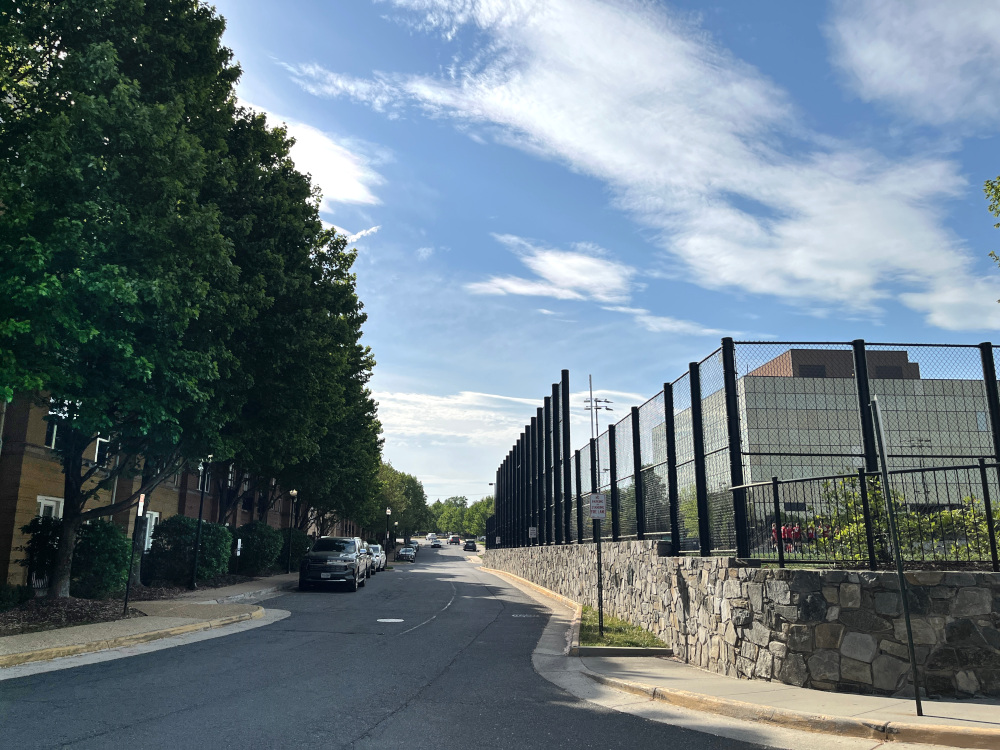
Apartments to the south, data center proposed to be on the right, 107 ft. away.
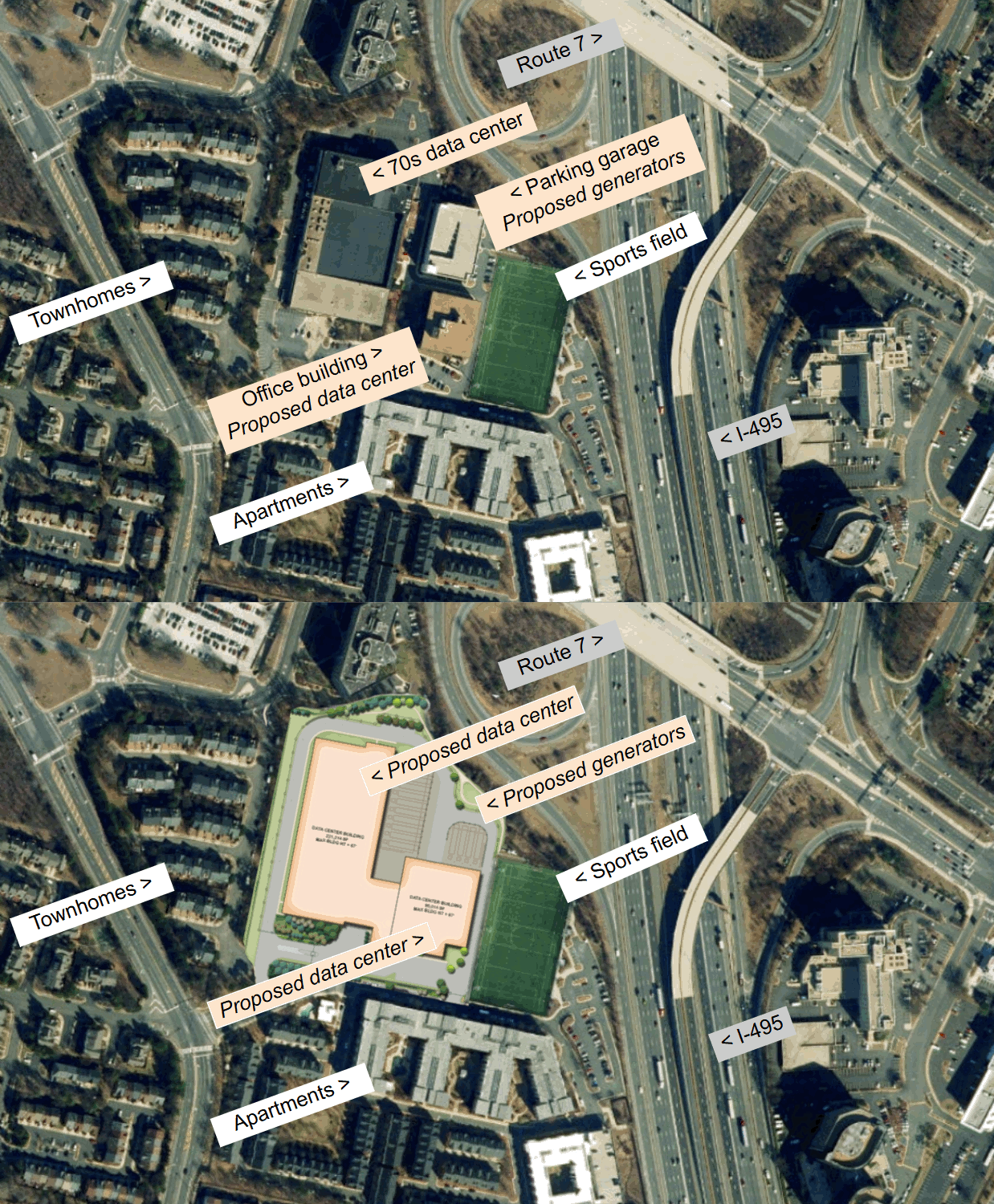
Click the image to view details of the current site and the data center proposal at the Quantum Dr. “Vienna Cloud” proposal site.
But a leap forward only counts if you don’t step back as soon as a developer finds the rules inconvenient.
Vienna Cloud’s developer is asking Fairfax County to go backward with this Special Exception. The proposed complex is so big and so hemmed in by existing neighborhoods that the new data center buildings would sit just 131 feet away from townhomes to the west, and a mere 107 feet from an apartment complex to the south.
Residents were promised better, and how Fairfax County decides in this case will set precedent for the county’s future.
Wrong size, wrong place
80,000 square-feet is the allowable size limit for building developments in Fairfax County without requiring public input. However, Vienna Cloud wants to occupy more than 316,000 square feet – nearly four times larger than what current rules allow. Imagine 5-and-a-half football fields of data center warehouses. If a data center of this magnitude is squeezed into an area so close to homes and apartments, people in this area will be negatively impacted.
A data center doesn’t belong within a mile from Metro, either. Fairfax County is again considering breaking another of its own rules.
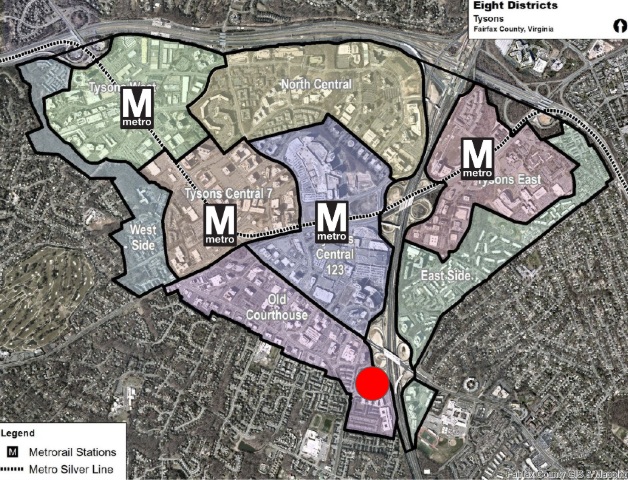
Base image from page 7 of the April 24, 2026 Statement of Justification.
Not so long ago, Loudoun Gateway, the so-called “loneliest Metro station,” was “envisioned as a thriving mixed-use stop with retail and office space and perhaps a convention center or entertainment venue.” Now, because this stop is surrounded by data center construction, Loudoun Gateway has the lowest ridership of all metro stations, and the parking garage mostly sits empty. Filling prime, transit-adjacent land with a data center complex that generates no foot traffic, employs very few people on-site, and creates no community life would permanently squander the potential of this area.
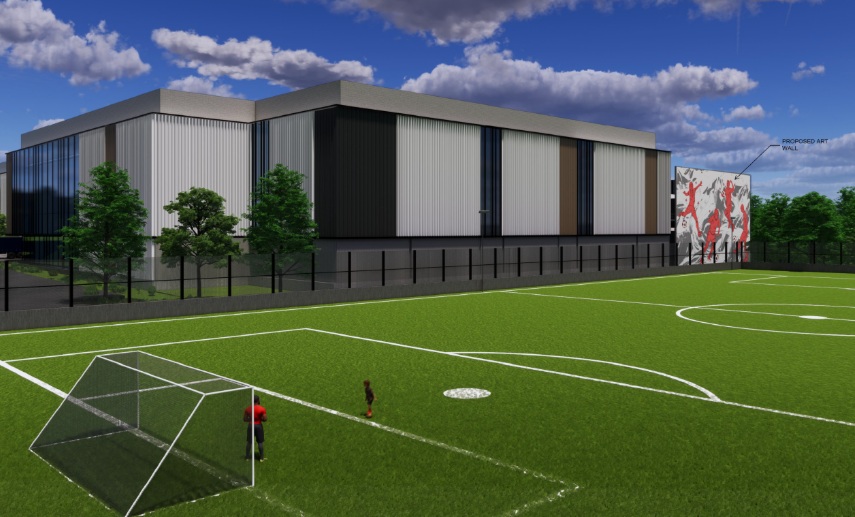
Sports field rendering from April 24, 2026 developer plat document (see page 26 of PDF)
The placement of diesel-powered generators used for emergency backup power is another major concern. Many generators (each the size of a tractor-trailer) would sit less than 50 feet from an adjacent sports field. A larger bank generators would be just 130 feet away (for a total of 28 generators proposed). While diesel generators are typically approved only for backup power, we have already seen weakened regulations and restrictions at the state level and, multiple times in 2026, exceptions at the federal level.
As energy needs continue to stretch the demand for power, the data center industry increasingly pitches generators as an alternative to taxing the grid. But every time these diesel generators run, health dangers increase for nearby children and adults. Imagine your child running down the field inhaling diesel generator fumes. A data center and a sports field are clearly incompatible.
Deleting trees for servers
County rules require new developments to include an appropriate amount of tree canopy. If a developer can’t fit the required number of trees on site, they pay into a tree planting fund — about $900 per missing tree — as a substitute.
Vienna Cloud’s developer is offering to pay more than $46,000, claiming there’s no room for the required trees. That means that this dense, heat-generating mammoth would also lack the minimum greenery required to at least partially offset its negative impacts. If County leaders allow it, this would be yet another broken rule/broken promise to residents who would be denied landscape screening for their homes and neighborhood spaces.
The bottom line is that this site is the wrong place for this project.
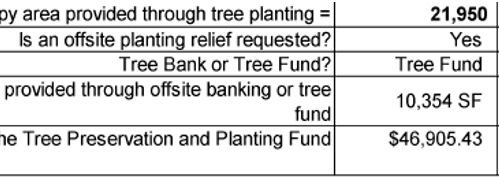
Tree canopy details from April 24, 2026 developer plat document (see page 19 of PDF)
. . .
. . .