The following is the first piece in a quarterly series that will showcase the streams sampled by Nature Forward’s Water Quality Monitoring program, along with the volunteers and communities that interact with them. For this inaugural Creek Chronicles, Grassroots Engagement Coordinator Douglas McRae accompanied a team to Goshen Branch just as the fall season approached its peak. Stay tuned for future Creek Chronicles in upcoming monitoring seasons!
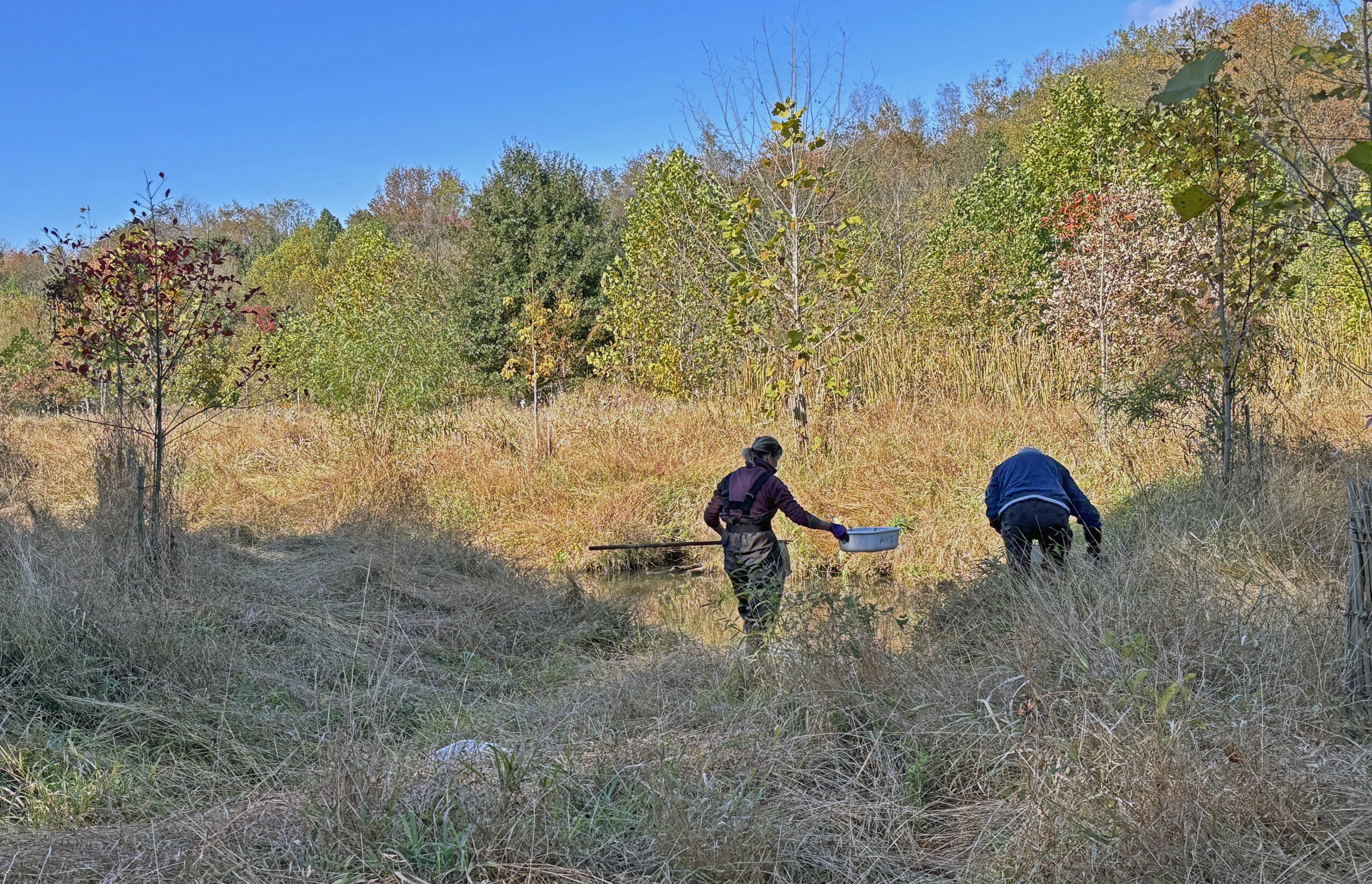
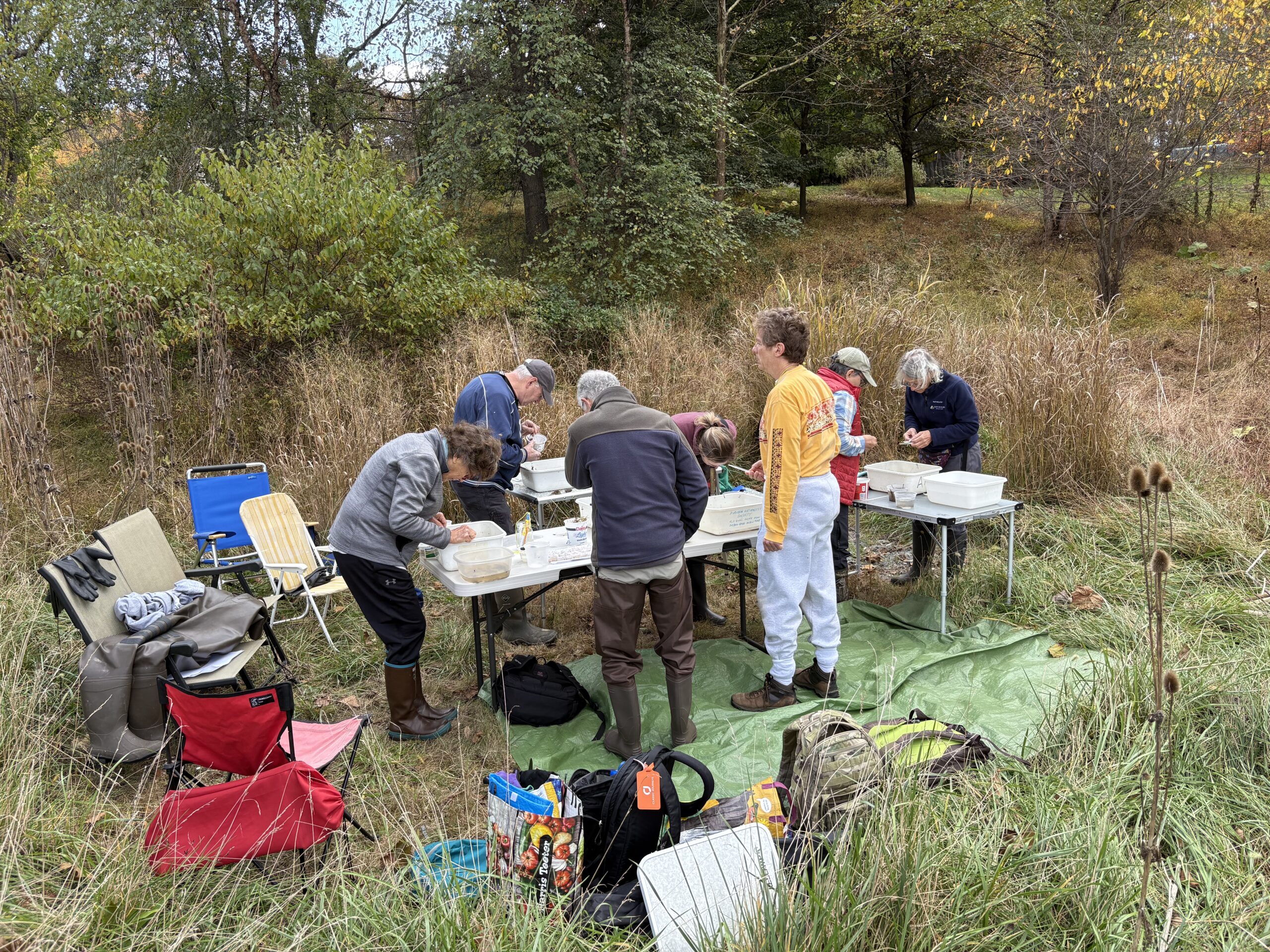
Amid tall grasses and cut-leaf teasel, a group of stream monitors lays down a ground tarp and sets up folding tables and lawn chairs. Aquatic D-nets and white dishpans lie off to the side. We adjust our parkas and waterproof boots: protection from deer ticks as well as the morning chill. It’s a clear, mild autumn morning, perfect conditions for carrying out seasonal water quality monitoring at Goshen Branch, a tributary of Great Seneca Creek, situated in Montgomery County’s largest watershed. Stream monitoring teams have regularly visited this site to sample benthic macroinvertebrates since 1995, though the site is currently in search of a new volunteer team leader. Today, a group of us will make the last collection of the year.
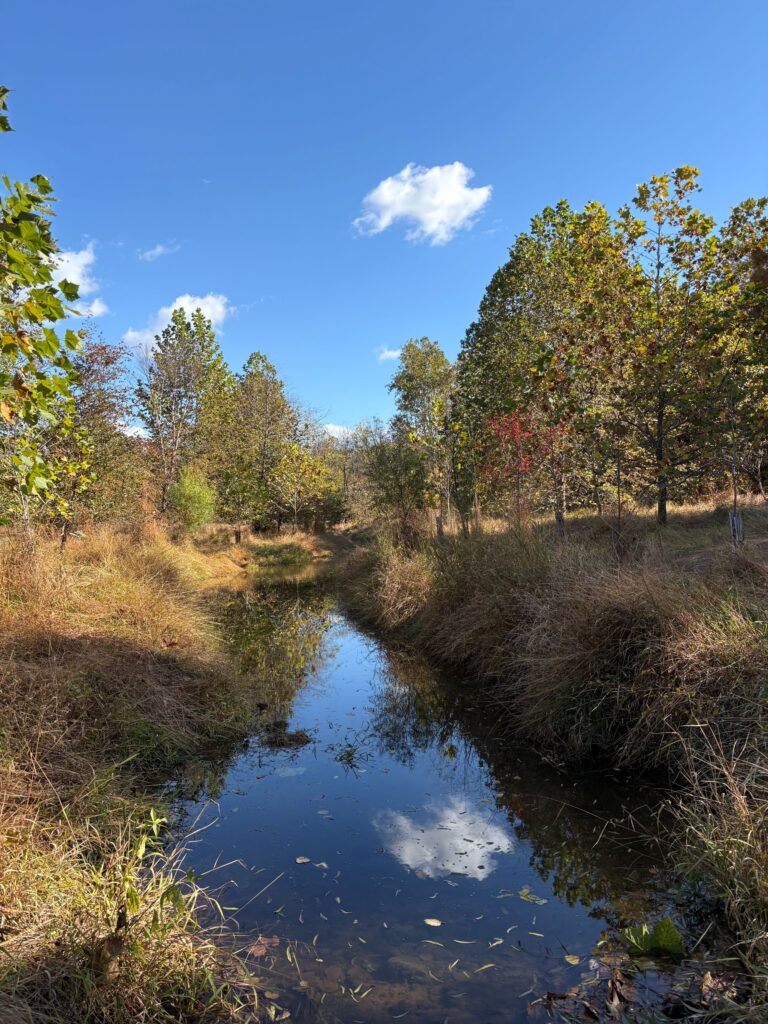
Goshen’s stream ecology has changed substantially in recent years. Montgomery County undertook a stream restoration project along Goshen Branch in 2011 and 2012, transforming the stream valley into wetlands to offset the impacts from the construction of the Inter County Connector (ICC, or MD-200). Subsequently, water quality at Goshen Branch declined after 2013, along with the numbers and diversity of benthic macroinvertebrates. Beginning in 2017, however, the stream site’s reported Index of Biological Integrity (IBI) began to climb closer to pre-2011 levels. Recent monitoring visits hint at further stabilization, though conditions continue to fluctuate. Sparse tree canopy and non-native stiltgrass provide less-than-ideal substitutes for native plants and trees growing along its banks. Monitors who’ve visited Goshen Branch before the restoration note that the banks show fewer signs of erosion—a welcome change from pre-restoration days.
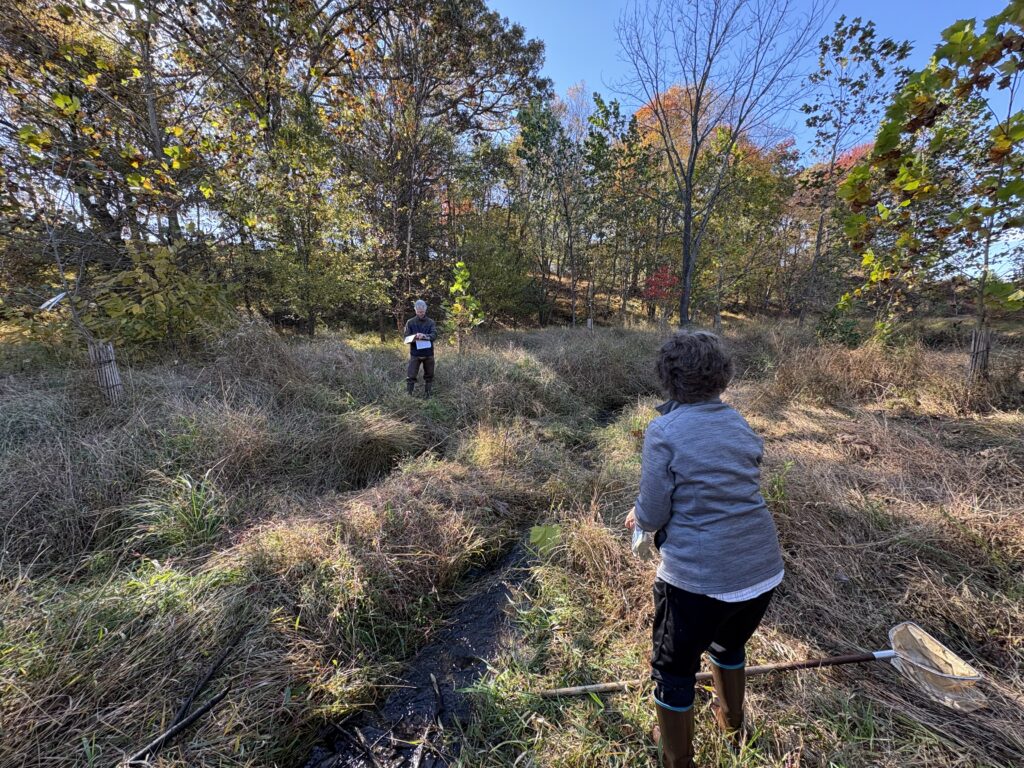
After some searching, the team locates several riffles—rocky, shallow parts of the stream where many macroinvertebrates make their dwellings. Pairs of monitors gingerly scrub submerged rocks and stir silt into downstream nets. Others sweep their nets through submerged vegetation. As the team works, a breeze rustles the branches of nearby trees, a reminder that in a short time they will be bare from leaves. Some of those leaves will drop into the stream, creating leaf packs that will provide some macroinvertebrates with sustenance over the coming months.
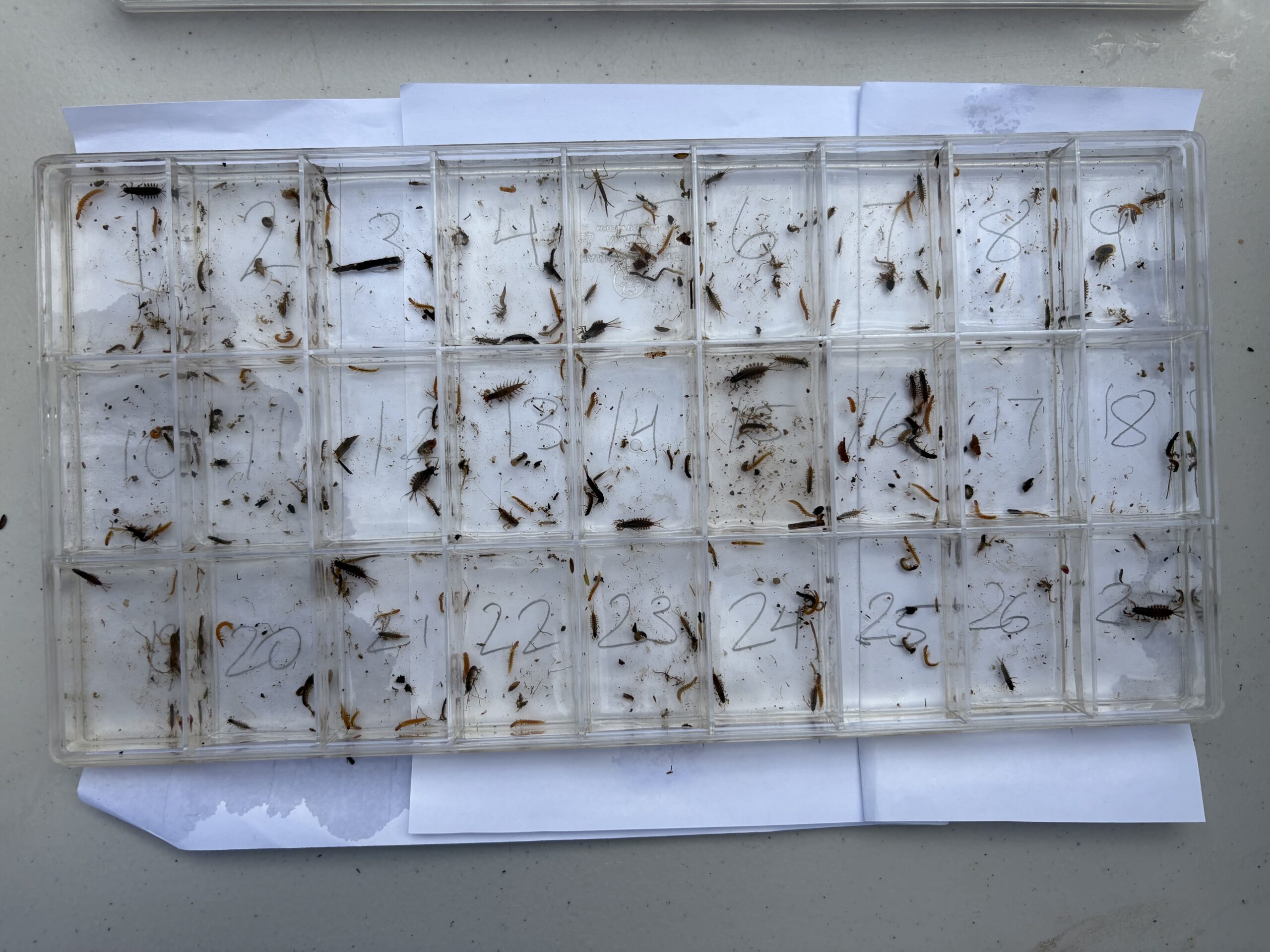
Trying not to trip in the long grasses, we make our way back to the tables and begin the process of searching through the collection bins where we’ve placed our samples. Over the course of the next few hours, we find benthic insect larvae and nymphs, tiny adult beetles, scuds, aquatic worms, and even a pair of crayfish. Caddisfly larvae predominate, while brush-legged mayflies also form a strong contingent. The number of macroinvertebrates and the diversity of species collected will help us determine the stream’s health.
As the process of identifying and counting slowly unfolds, a few team members look to the sky, hoping to catch sight of a turkey vulture gliding overhead to a nearby tree. Eventually, attention returns to the task at hand, and our taxonomy experts will identify 24 different families of macroinvertebrates, including a strikingly patterned caddisfly larva.). We learn later that this biotic survey of Goshen Branch yielded an IBI Score of 4.14: a GOOD stream health rating, and its highest score in over two decades. When we depart Goshen Branch, novices and veterans alike are intrigued and enchanted by what we’ve found in the riffles and under the rocks of Goshen Branch. Even as Goshen Branch has changed, its smallest inhabitants have endured and hopefully will continue to thrive for years to come.