
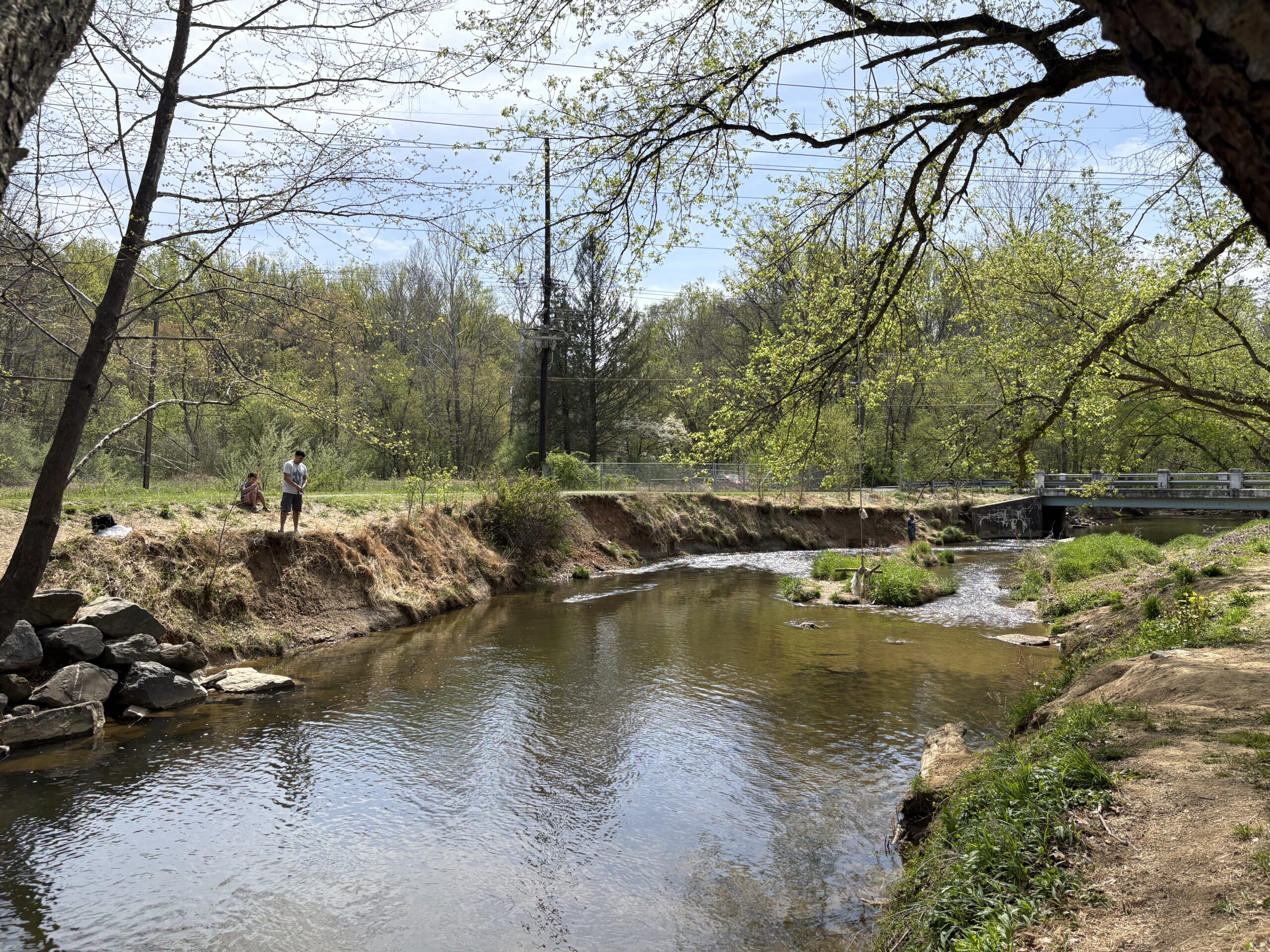
The following is the third piece in a quarterly series showcasing the streams sampled by Nature Forward’s Water Quality Monitoring program, along with the volunteers and communities that interact with them. Grassroots Engagement Coordinator Douglas McRae caught up with a monitoring crew at Great Seneca Creek last month. Stay tuned for future Creek Chronicles in upcoming monitoring seasons!
Manicured medians give way to tall trees as I drive north from Rockville and turn off towards Seneca Creek State Park. I’m joining a group of volunteers monitoring along Great Seneca Creek on a spring afternoon, and signs of spring are all around. As I walk from my car to the creek, I notice that several anglers have already assembled on the creek’s left bank on either side of a concrete bridge. They are casting their lines for stocked rainbow trout that dwell in the pools and feed in the riffles where our monitors draw samples. Water quality matters all the way up the food chain.
Stream monitoring along Great Seneca Creek is organized by Seneca Creek Watershed Partners (SCWP), an organization protecting the watershed that covers a third of Montgomery County. By the time I arrive, the team led by Kevin Misener (a SCWP board member) has already begun moving individuals from today’s abundant macroinvertebrate collection into cells of a subsampling tray. Each tray where we sort our sample pulses with the unique movements of each macroinvertebrate: twisting, skimming, darting, hiding. I try to get a closer look at a large flatheaded mayfly larva, and it scurries under a piece of leaf, the only shelter in its temporary holding cell.
Matthias Graf, one of the regular monitors at this site, comments to me that conditions at this site vary across seasons; sometimes, it’s hard to meet the sample threshold of 100 macroinvertebrates. Water levels impact macroinvertebrate environments, and odors from a nearby sewage treatment plant occasionally punctuate the atmosphere: a pungent reminder of human impacts across the Seneca watershed. Today’s catch, however, is abundant and diverse, a good portent after an icy winter.
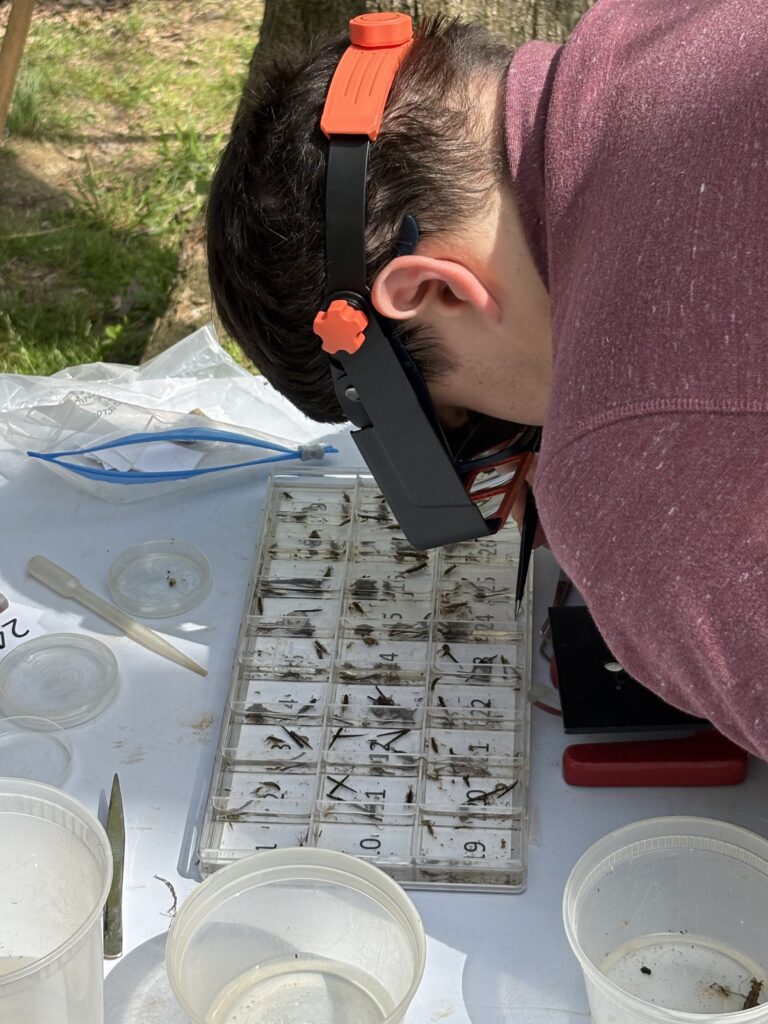
Identifying macroinvertebrates
Matthias Graf, one of the regular monitors at this site, comments to me that conditions at this site vary across seasons; sometimes, it’s hard to meet the sample threshold of 100 macroinvertebrates. Water levels impact macroinvertebrate environments, and odors from a nearby sewage treatment plant occasionally punctuate the atmosphere: a pungent reminder of human impacts across the Seneca watershed. Today’s catch, however, is abundant and diverse, a good portent after an icy winter.
I eventually peel off and cross to the opposite creek bank where I chat with some of the anglers about their catches. One weekend angler, Saad, has set up a spot with his family by the bridge to cast his line. Saad has fished along Seneca Creek for over fifteen years but also recalls growing up fishing with his father in the Atlantic Ocean by Rabat, the capital of Morocco. He’s noticed over time that more families have started coming to enjoy the creek, whether to fish or picnic, or dip into the water from a small gravel bar further upstream and he hopes that new visitors respect the pristine nature of this stream valley park: removing their trash and staying aware of anglers and other users.
Indeed, during the height of the Covid-19 pandemic, local families rediscovered Seneca Creek State Park’s trails, streams, and picnic groves. Declining park visitation rebounded as people sought safe ways to escape from indoor isolation. Weekend creek explorers and hikers joined anglers, and old and new sought a new coexistence along this quiet tributary. Occasionally, visitors even encounter the water quality monitoring team on their seasonal visits and learn a thing or two about the macroinvertebrates hiding under the stream cobbles. Along Great Seneca Creek, I see all the ways that streams can matter to individuals and communities, and how memories are both made and recalled along its banks.
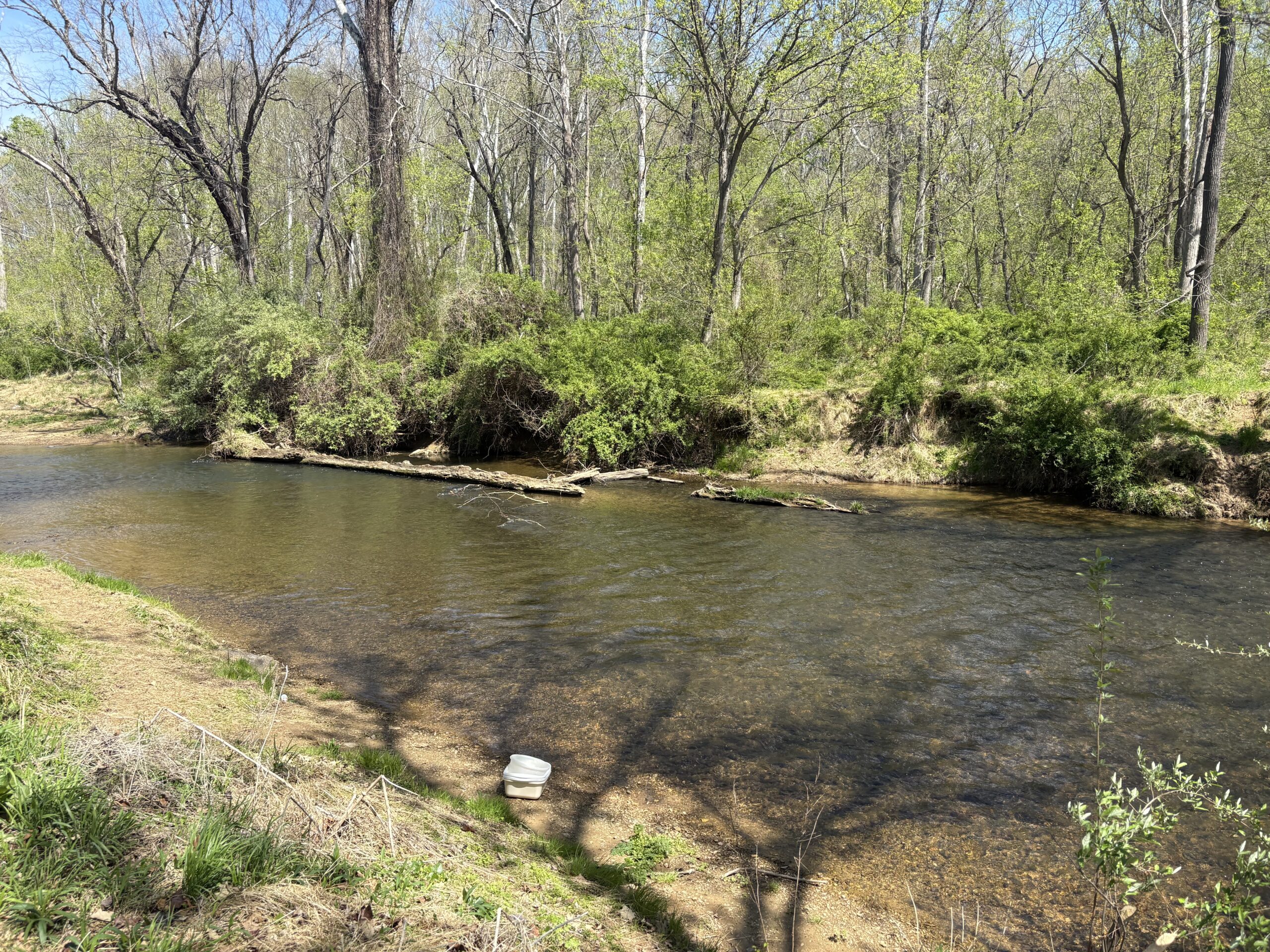
Washing bins after sampling along Great Seneca Creek