
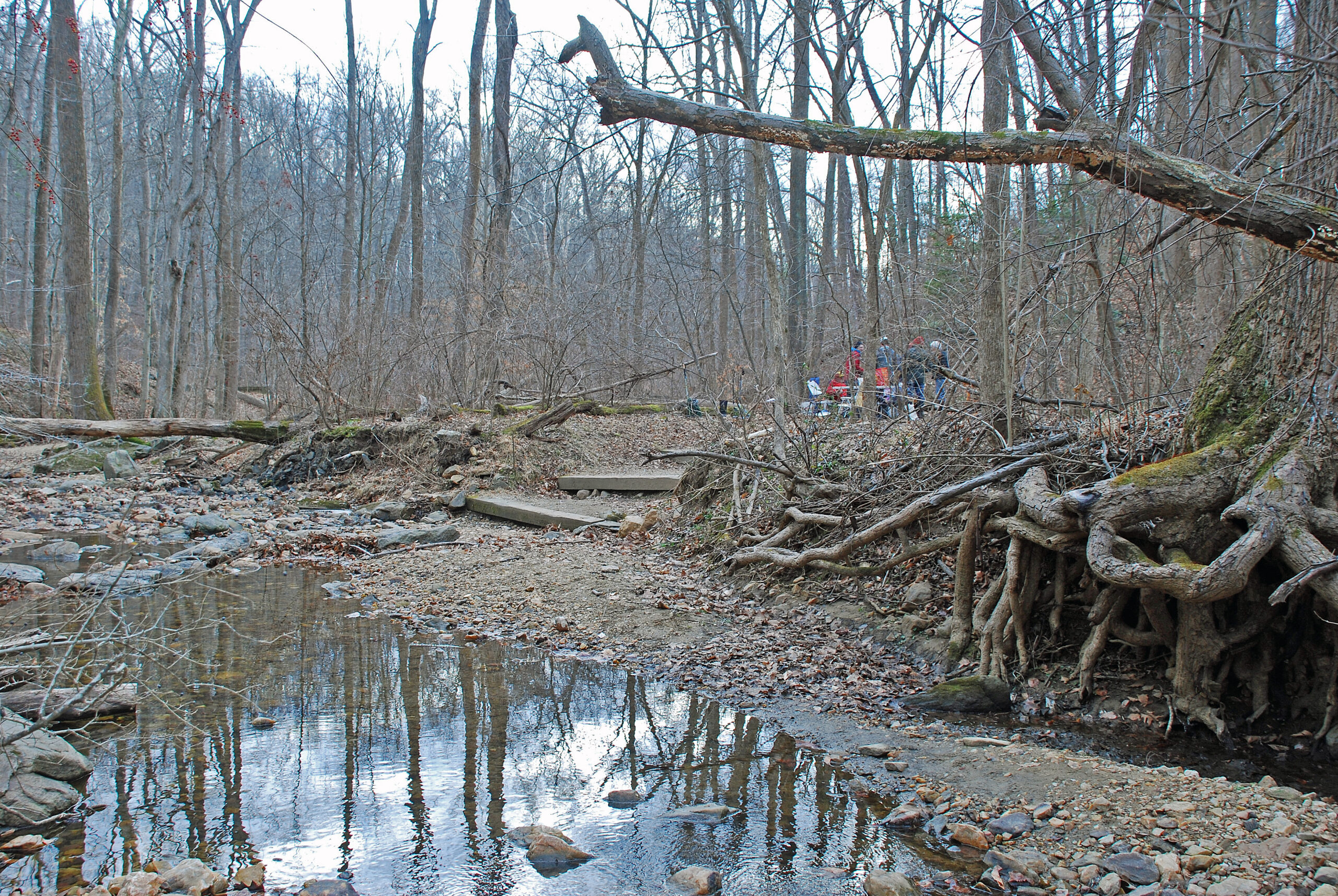
The following is the second piece in a quarterly series that will showcase the streams sampled by Nature Forward’s Water Quality Monitoring program, along with the volunteers and communities that interact with them. Grassroots Engagement Coordinator Douglas McRae experienced winter monitoring with the Pinehurst Branch crew in Northwest DC. Stay tuned for future Creek Chronicles in upcoming monitoring seasons!
It’s early afternoon, and sunlight begins to break through clouds that hours earlier had spread sleet over Beach Drive. As I park my car by Picnic Grove 8 in Rock Creek Park, I glimpse folding tables set up in the woods a short distance from the road: a group of Water Quality Monitors preparing to sample for benthic macroinvertebrates at Pinehurst Branch.
Winter is an optional season for Nature Forward’s macroinvertebrate stream monitoring due to the variable conditions created by colder temperatures. Pinehurst Branch water quality monitors, however, have racked up twenty-six winter monitoring sessions dating back to the 1990s, missing only a few years when the creek has frozen. When I informally poll the assembled volunteers on why they come out so consistently in the winter, answers vary: maybe they’re particularly “dedicated” or maybe just “crazy.” Regardless of their motivation, the weather today has turned out in our favor, making it perfectly pleasant to be out in the park.
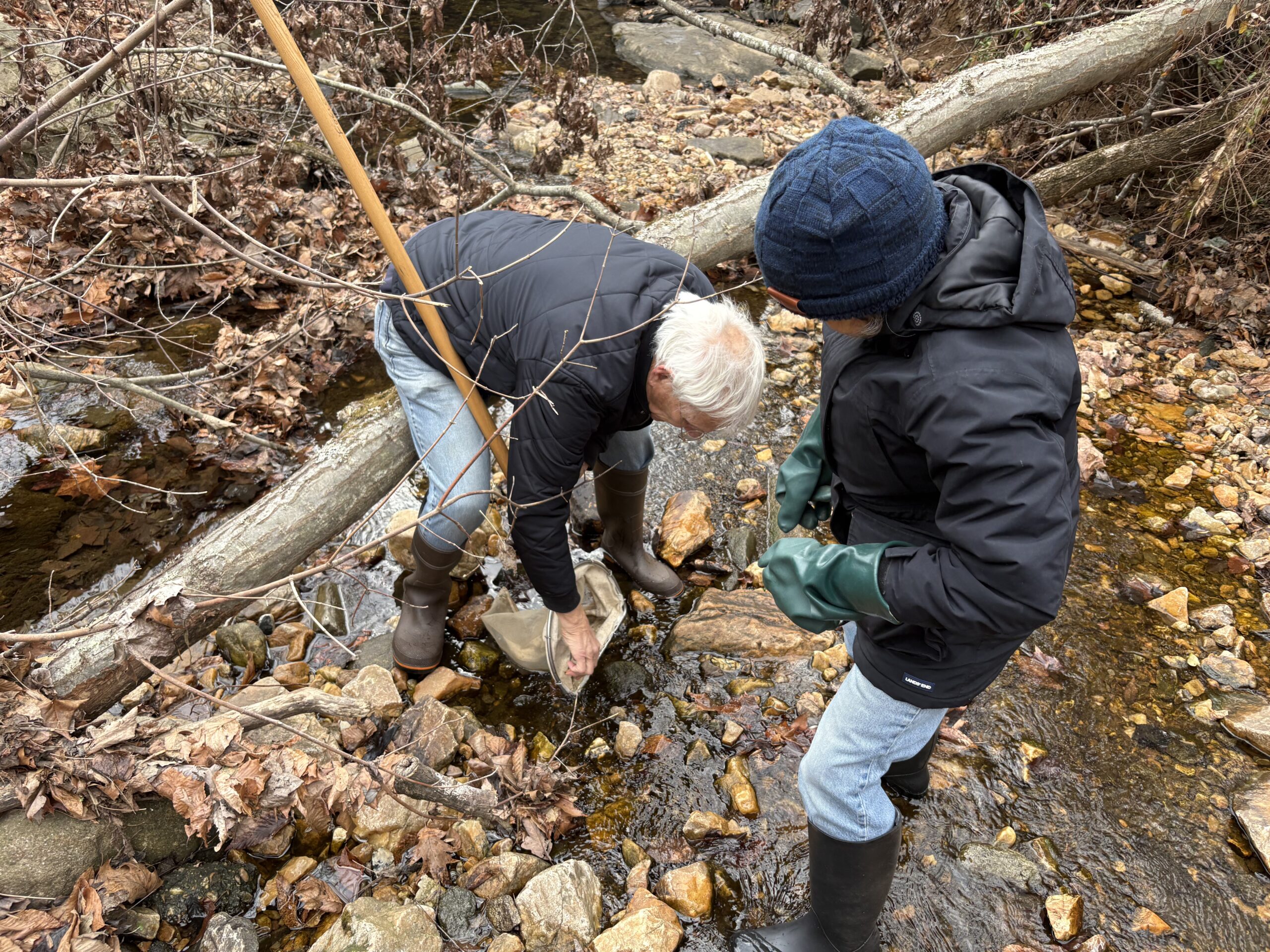
Volunteers Bill Yeaman and Chris Powell prepare to collect macroinvertebrates from Pinehurst
I head to a lower section of the creek with monitors Chris Powell and Bill Yeaman. Overhead, a murder of crows pursues a hawk, cawing cacophonously. A short time later, low croaks issue from the bare treetops to the north—a raven makes its presence known. On the ground by creek’s edge, monitors split into groups to search for riffles, the shallow parts of the stream where water flows rapidly over loose cobble. Finding the minimum number of sampling spots is often a challenge at Pinehurst, Chris tells me, though they always manage to find enough to take the requisite twenty samples. In addition to chronic low flow, for the past several months Pinehurst Branch has been drier than usual. Bill agrees, and he would know: a retired park ranger, he has been monitoring at Pinehurst since 1995. Bill coaches me in the correct methods for rubbing stones and silt into downstream D-nets. Pinehurst Branch monitors are assiduous protocol followers, doing their best to collect a representative sample of macroinvertebrates living in this small tributary.
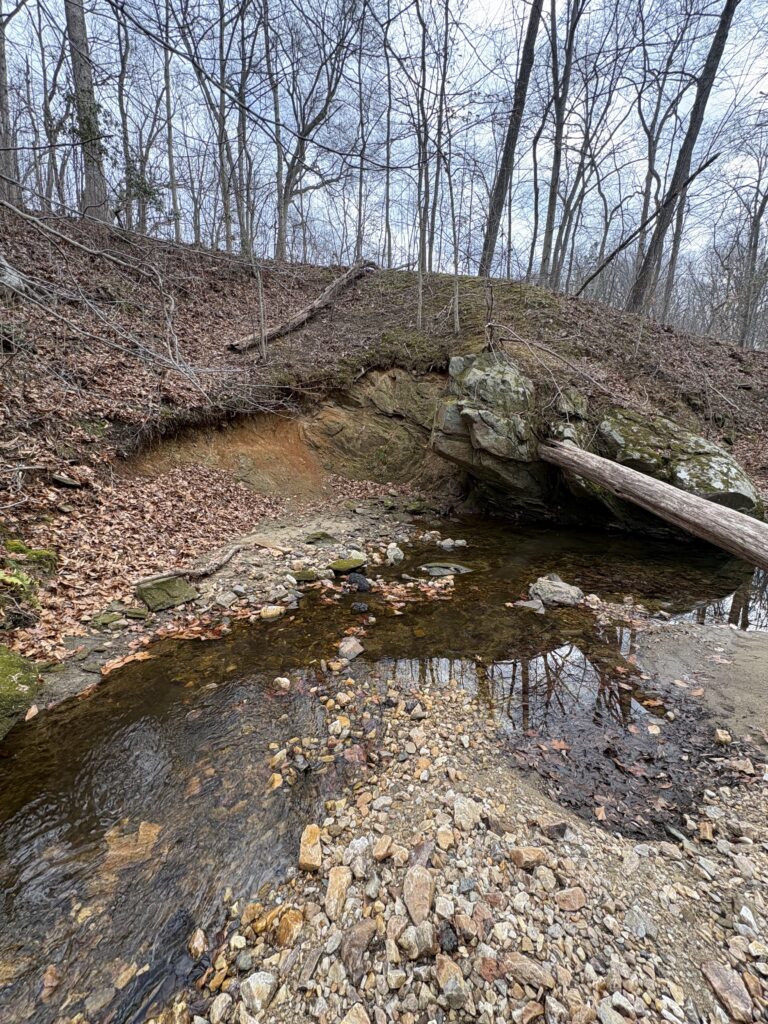
Pinehurst Branch’s IBI scores have been stable, if consistently poor, over the years. An urban tributary of Rock Creek in Washington, DC, this stretch of Pinehurst is due for a restoration project, overseen by DC’s Department of Energy and Environment (DOEE). Wetland restoration, improved stormwater management and invasive vegetation removal could revitalize the stream valley’s habitat. Down by the stream we see evidence of erosion and undercut banks (see image on left), visible signs of habitat degradation that compound with upstream road and sewer runoff. Pinehurst’s plight is like that of other streams that drain into Rock Creek—and road salt leaching into the stream always impacts the stream’s habitat during the coldest months of the year.
Back at the folding tables, a few afternoon hikers stop to peer into the sample trays. Longtime team leader David Cottingham has long educated the curious at this busy intersection of foot trails, even printing a guide to macroinvertebrate sampling for passersby to pick up. This afternoon, we’ve collected an unusual number of crane fly larvae, some large enough that they can easily wriggle their way out of the ice cube trays where we sort them. Another standout is a small damselfly nymph, likely procured from one of a few rootwad habitats. After our count is complete, monitors carefully return the collected macroinvertebrates to their respective habitats. I bring the damselfly back to the submerged rootwad cluster from whence it came. Hopefully over time, many more will make their home in Pinehurst Branch.
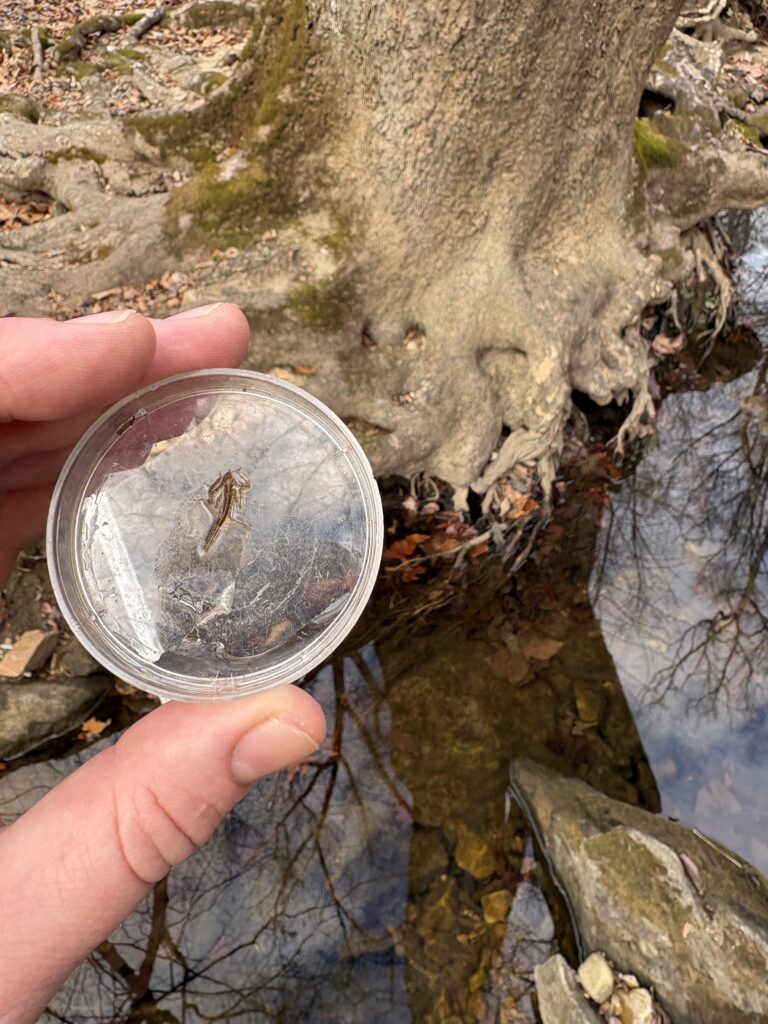
Damselfly nymph on its way home
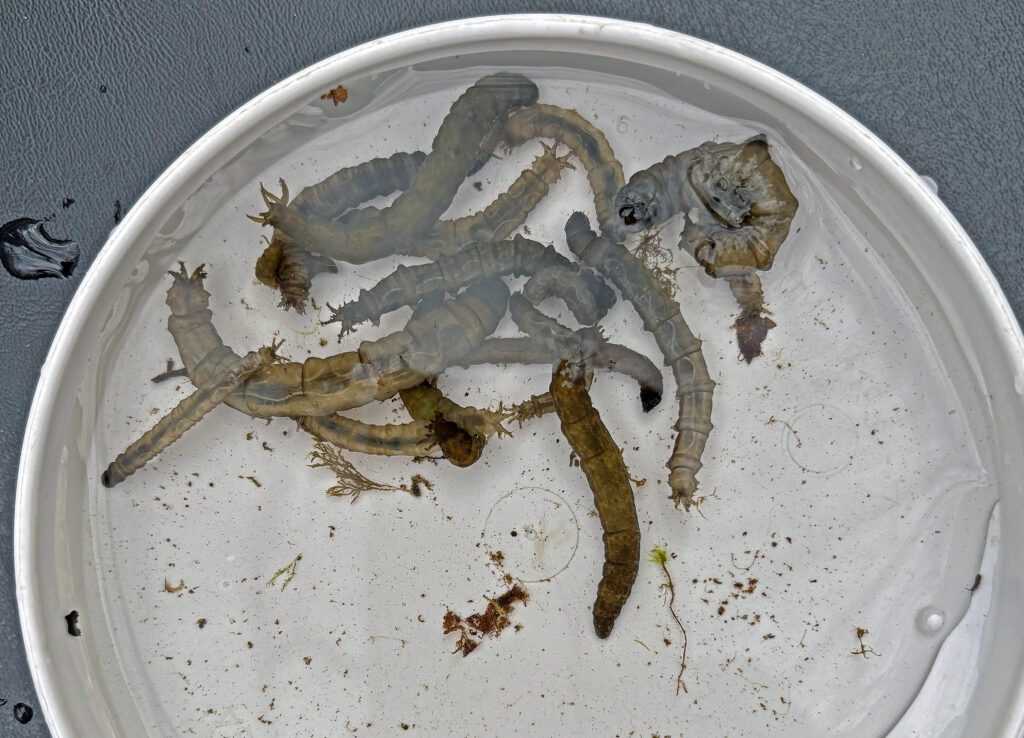
A cluster of crane fly larvae collected at Pinehurst Branch. Photo by Gregg Trilling.